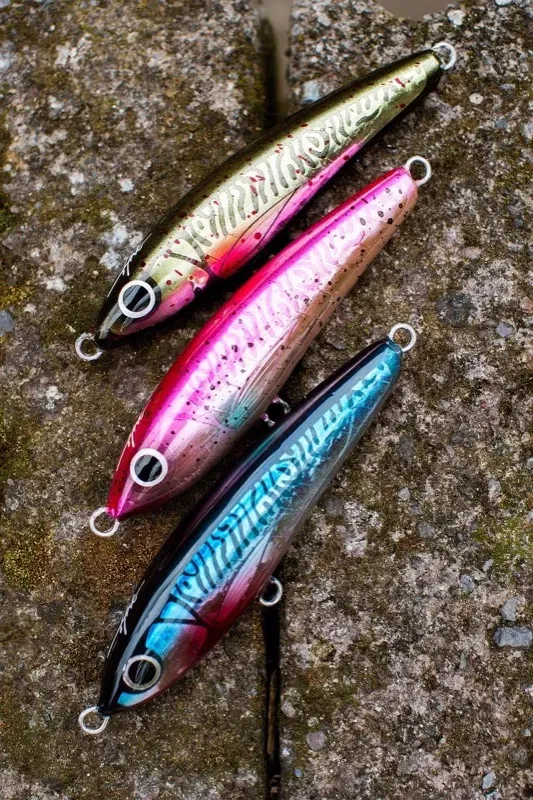
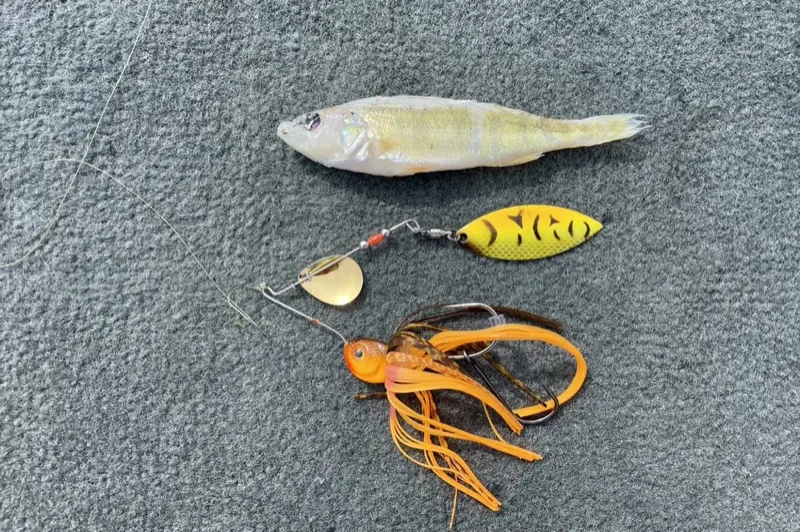
Here is the thing most anglers get wrong about lure color: they treat it like the answer. Grab the “right” color and you are dialed in. But color is one variable in a much bigger equation — and it is not even the most important one. Depth, water clarity, light conditions, forage base, contrast, retrieve speed, and the biological reality of how bass actually see all carry weight in the decision. Change any one of those variables and the “best” color changes with it.
I have spent years on the BFL circuit throwing every color imaginable, and the patterns that hold up are not about picking the perfect shade. They are about understanding how all these factors interact — and making your lure the easiest thing for a bass to detect and commit to in whatever conditions you are facing.
Let me walk you through what the science says, what the water tells you, and how to put it all together.
How Bass Actually See Color (It Is Not What You Think)
Most articles will tell you bass can see color “just like humans.” That is flat wrong, and getting this right changes how you think about your tackle box.
Humans are trichromatic — we have three types of cone cells (blue, green, red) that let us perceive the full rainbow. Bass are dichromatic. They have only two cone types: green-sensitive single cones peaking at 535 nanometers and red-sensitive twin cones peaking at 614.5 nanometers. They have no blue cones. No ultraviolet cones. Just green and red [1]. This two-cone system fits a broader pattern across freshwater predators — species in green-dominated light environments tend to evolve cone pigments matched to the available spectrum, with red-shifted sensitivity being a hallmark of fish in shallow, vegetated habitats [7].
What does that mean practically?
- Bass see red as the most distinct color. Red is the hue bass discriminate most reliably — 85% accuracy against achromatic backgrounds in behavioral testing. Green is also discriminated from grays, but red stands out most strongly [1].
- Bass cannot tell chartreuse-yellow from white. Both stimulate their green cones at similar intensity — they appear as the same bright, pale tone. Chartreuse does not “pop” with color for a bass; it pops with brightness [1, 15].
- Bass cannot distinguish blue from black. Without blue cones, both register as dark. That midnight-blue soft plastic you love? A bass sees it essentially the same as a black one [1].
This does not mean chartreuse or blue are bad choices. It means they work for different reasons than you might think. Chartreuse works because it is extremely bright — high luminance against a dark background. Black and blue work because they create a strong, dark silhouette. Color and brightness are two different signals, and bass use both.
Their rod cells peak at about 528 nanometers (green range), and like most fish, bass have a tapetum lucidum — a reflective layer behind the retina that bounces light back through the photoreceptors for a second pass [2, 3]. This gives them solid low-light capability, which is why dawn, dusk, and overcast conditions often produce the best bites. But here is the tradeoff: in low light, bass shift to rod-mediated vision, which is essentially monochrome. At dawn and dusk, they are not seeing color at all — they are seeing contrast and silhouette.
The Depth Variable: Why Your Red Crankbait Turns Black
Water swallows color from the red end of the spectrum first. This is pure physics, and it applies to every body of water on the planet — though how fast it happens depends on clarity.
In reasonably clear freshwater [5, 6, 9, 17, 18] (note: these depths are derived from clear-water optics research — in stained or turbid water typical of many bass lakes, these ranges compress dramatically, sometimes by half or more):
- Red light is absorbed within the first 15-20 feet
- Orange fades by about 35-45 feet
- Yellow loses intensity around 65-75 feet
- Green and blue persist as deep as light penetrates
That red crawfish-pattern crankbait you are cranking at 12 feet? It still looks red. Drag it down a ledge to 25 feet and it has gone dark brown to black. By 30 feet, every warm-colored lure in your box is some shade of gray or black.
This is not a problem — it is information you can use. A red jig at 25 feet is not invisible. It becomes a dark silhouette, which bass detect by contrast against the lighter water above. But if you specifically want the “red signal” that bass are uniquely wired to detect, you need to keep it in the zone where red light still exists. Shallow flats, riprap in 5-10 feet, topwater — that is where red actually registers as red.
Green and chartreuse maintain their chromatic identity deeper because their wavelengths align with the last colors to be absorbed. A green pumpkin soft plastic at 20 feet still looks green. This is one reason green pumpkin is arguably the most versatile soft plastic color ever made — it works across a wider depth range than any warm color.
Water Clarity: Three Different Worlds
Not all “stained” water is the same, and this matters more than most anglers realize. The type of particles in the water changes which colors survive and which get swallowed.
Clear Water (Secchi Depth 4+ Feet)
In clear conditions, bass rely heavily on vision and can discriminate colors at distance. All wavelengths are available. This is where match-the-hatch matters most — if the forage base is threadfin shad, a silver-and-white swimbait outperforms a chartreuse one because it looks like food, not just a bright object.
Natural, translucent colors work because they do not trigger the “that does not look right” response in a predator that can see detail. Green pumpkin, watermelon, shad patterns, and ghost colors with some transparency are your baseline. On bright days with a high sun angle, dial back the flash — too much glare from a spinner blade or chrome crankbait can actually repel pressured fish.
But here is the counter-variable: even in clear water, low light changes the equation. At dawn, dusk, or under heavy cloud cover, the available light shifts. A darker silhouette or a solid color with more contrast can outperform a natural, translucent option because bass have shifted toward rod-mediated vision and are keying on shape, not detail.
Tannin-Stained Water (Secchi Depth 1-3 Feet)
Tea-colored water is common across the Southeast and anywhere with decaying vegetation. The brown tint comes from dissolved organic matter — tannins and humic acids that preferentially absorb blue and ultraviolet wavelengths while allowing green, yellow, and red light to pass [6, 8, 10]. This is the opposite of depth absorption, and it changes your color strategy.
In tannin-stained water:
- Blue, purple, and silver lures lose visibility fast because the water itself is filtering out the blue end of the spectrum.
- Gold outperforms silver on spinner blades and blade baits because gold reflects the warm-spectrum light that the tannins let through, while silver reflects blue light that has already been absorbed [11].
- Orange, red, and chartreuse gain an advantage because the remaining light is concentrated in their wavelength range.
- Black and dark colors still create strong silhouettes against the lighter water surface when bass look up.
This is why tournament anglers on tannic Southern impoundments lean so heavily on black-and-blue jigs, red-and-black crawfish patterns, and gold Colorado-blade spinnerbaits. It is not tradition — it is physics.
Clay-Turbid / Muddy Water (Secchi Depth Under 1 Foot)
Muddy water from suspended clay or silt scatters light uniformly across all wavelengths [6]. Unlike tannin stain, there is no selective filtering — everything just gets dimmer, fast. Visibility drops to inches.
Here, color is demoted as a variable and contrast takes over. The two approaches that work:
- Maximum contrast: Solid black, solid white, or high-contrast combos (black/chartreuse, white/red). These create the sharpest possible silhouette in minimal visibility.
- Maximum vibration: This is where lure color becomes secondary to lure action. Colorado-blade spinnerbaits, rattling lipless cranks, vibrating jigs, and anything that displaces water and activates the lateral line should be in your hand [16]. Bass have a row of pressure-sensitive nerve endings along both flanks — the lateral line — that detects water displacement from several body lengths away. In muddy water, the lateral line replaces vision as the primary detection system.
A good rule: the dirtier the water, the more you should prioritize what the lure does (vibration, thump, displacement) over what it looks like. Color still matters, but it is now third or fourth in the equation behind vibration, profile, and contrast.
Light Conditions: The Variable Nobody Talks About
Water clarity gets all the attention, but the light hitting the surface changes the equation just as much.
Bright sun, high angle (midday): Maximum light penetration means more color is available at depth. Natural colors with some translucency tend to outperform obnoxious brights because bass can see detail and will reject unnatural appearances in pressured fisheries. This is also when shade becomes a key location factor — bass positioned under docks, ledges, or vegetation are already in reduced light, so the “clear water natural” rule softens.
Overcast / heavy cloud cover: Cloud cover filters and diffuses sunlight, reducing overall intensity and shifting the spectrum slightly. Chartreuse, white, and brighter colors gain effectiveness because they provide more luminance contrast against the dimmer background. Bass eyes adapted for low light (remember that tapetum lucidum) remain more engaged during extended overcast, so these can be some of the best days to fish — and to throw colors that stand out.
Dawn and dusk: This is the golden window where bass transition from cone-mediated color vision to rod-mediated monochrome vision. During this shift, they key on silhouette, movement, and contrast more than color. Dark profiles against the light sky (topwaters, buzzbaits, dark swimbaits worked high in the column) are devastatingly effective because bass look up, see a sharp outline, and commit. The specific color of a buzzbait at 5:30 AM matters far less than the fact that it is dark, loud, and moving.
Night: Bass are in full scotopic (rod-only) mode. Color is functionally irrelevant. Solid black creates the strongest silhouette against any ambient sky glow. Vibration and sound dominate. This is spinnerbait and big-profile swimbait territory.
Forage Matching: When Color Climbs the Variable Ladder
There is one situation where color moves up the priority list: when bass are locked onto a specific forage and you need to match the hatch to get bit.
During a shad spawn along a seawall, a pearl-white or silver fluke in the right size will outfish a green pumpkin or black-and-blue option ten to one. Not because bass “like” white better — because they are keyed into a specific prey profile and your lure needs to fit inside that search image.
The major forage categories and their color profiles [12, 13]:
- Threadfin/gizzard shad: Silver, white, pearl, gray back. Size match matters as much as color.
- Bluegill/sunfish: Green with orange/yellow accents. Green pumpkin with chartreuse tail nails this profile on soft plastics.
- Crawfish: Brown, orange, dark red, green pumpkin with red flake. Varies by season — crawfish turn bright orange during molting.
- Juvenile bass and perch: Greenish-gold, darker lateral bars. Perch-pattern cranks and swimbaits exist for a reason.
But even match-the-hatch is not about color alone. Size, profile, action, speed, and depth all need to align. A perfectly colored shad-pattern crankbait running 3 feet deeper than the baitfish might as well be invisible. Color gets you in the door; presentation closes the deal. For a deeper look at forage biology, see Match the Hatch: Forage Identification.
Fluorescent and UV Lures: What Is Real
You will see lure companies pushing “UV-enhanced” and fluorescent patterns as the next revolution. Here is what the science actually says.
Adult bass lack UV-sensitive cones [1]. They cannot see ultraviolet light as a distinct color the way some juvenile fish or salmonid species can. So a UV-reflective finish is not creating some invisible signal that bass are keyed into.
However, fluorescent pigments do something different. They absorb UV and short-wavelength light and re-emit it as visible light at a longer wavelength. A fluorescent chartreuse lure does not glow with some secret UV magic — it converts ambient UV energy into extra visible brightness [14]. The lure literally reflects more visible light than a non-fluorescent version of the same color. In low-light conditions (deep water, overcast, dawn/dusk, stained water), that extra brightness can make a difference in detection distance.
Is it a game-changer? Probably not. Is it a small edge in specific conditions? The physics say yes. File it as a tiebreaker, not a primary selection criterion.
The Contrast Principle: Often More Important Than Color
If there is one concept that ties all of this together, it is contrast. Bass detect prey by the difference between the prey and its background — not by the specific color of the prey. High contrast equals easy detection. Low contrast equals natural stealth.
When bass are aggressive and actively feeding, you want high contrast — make it easy for them to find and commit. Bright days with dark lures. Dark conditions with bright lures. Moving baits with flash and vibration.
When bass are pressured or lethargic (post-front, high pressure, cold water), consider lower contrast — subtle, natural presentations that do not trigger avoidance. Translucent plastics. Muted colors. Slower retrieves that let the fish inspect without spooking.
This is where the barometric pressure variable intersects with color. That falling barometer before a front is not directly changing which colors “work” — it is changing how aggressive the fish are, which changes how much contrast and flash you can get away with. Water temperature plays the same role: bass have a thermal preferendum around 80-84°F where metabolic activity and feeding aggression peak [4, 19]. Outside that window — especially in cold water below 55°F or extreme heat above 90°F — they become lethargic and less willing to chase, which shifts the equation toward subtlety. Aggressive fish in a pre-frontal feed at optimal temperatures tolerate (and key on) maximum contrast. Post-frontal lockjaw fish in marginal temps need something subtle slid right in front of their nose.
Putting It All Together: The Color Equation
Here is how I approach color selection on any given day. It is not a chart — it is a framework where you weigh the variables based on what conditions are telling you.
Step 1: Read the water. Clarity comes first. Clear, stained, or muddy? Tannin or clay? This sets your baseline palette.
Step 2: Factor depth. If you are fishing deeper than 15 feet, warm colors have lost their chromatic value. Lean green, dark, or bright for contrast.
Step 3: Assess the light. Overcast days shift the equation toward brighter, higher-contrast options. Bright sun shifts toward natural, translucent, and muted.
Step 4: Identify the forage. If bass are locked on a specific prey, match it. If not, default to your clarity-based palette.
Step 5: Check bass mood. Pre-front and active fish — push contrast and flash. Post-front and pressured fish — pull back to subtle and natural.
Step 6: Let the fish tell you. Start with your best-guess selection and pay attention. Short strikes might mean the profile is right but the color is too aggressive. No interest might mean you are invisible. Adjust one variable at a time — do not change color, size, retrieve, and depth all at once or you will not know what mattered.
Color is one dial on a multi-dial dashboard. When all the other dials are set right — right location, right depth, right timing, right retrieve — color can be the difference between a decent day and a limit. When the other dials are wrong, no color on earth saves you.
References
- Mitchem, L.D., Stanis, S., Zhou, M., Loew, E., Epifanio, J.M., & Fuller, R.C. (2018). “Seeing red: color vision in the largemouth bass.” Current Zoology 65(1):43-52. PMC6347066
- Kawamura, G. & Kishimoto, T. (2002). “Color vision, accommodation and visual acuity in the largemouth bass.” Fisheries Science 68:1041-1046.
- Arnott, H.J., Maciolek, N.J., & Nicol, J.A.C. (1970). “Retinal tapetum lucidum: a novel reflecting system in the eye of teleosts.” Science 169(3944):478-480.
- Cherry, D.S., Dickson, K.L., & Cairns, J. (1975). “Temperatures selected and avoided by fish at various acclimation temperatures.” J. Fish. Res. Board Can. 32(4):485-491.
- Jerlov, N.G. (1976). Marine Optics. Elsevier Oceanography Series, Vol. 14.
- Kirk, J.T.O. (1994). Light and Photosynthesis in Aquatic Ecosystems. 2nd ed. Cambridge University Press.
- Loew, E.R. & Lythgoe, J.N. (1978). “The ecology of cone pigments in teleost fishes.” Vision Research 18:715-722.
- USGS Water Science School. “Water Color.” usgs.gov
- NOAA Ocean Explorer. “Light and Color in the Deep Sea.” oceanexplorer.noaa.gov
- Fondriest Environmental. “Chromophoric Dissolved Organic Matter.” fondriest.com
- VanDam, K. “Pay Attention to Blade, Color Combos.” BassFan. bassfan.com
- Kraken Bass. “Bass Fishing Lure Color Selection Chart.” krakenbass.com
- Academy Sports. “Fishing Lure Color Selection Chart.” academy.com
- FamilyFishin.com. “UV Lures Explained: What UV Reflectance Is and When It Actually Works.” familyfishin.com
- SpaceFish.com. “The Secret Power of Chartreuse.” spacefish.com
- Outdoor Life. “How to Fish a Spinnerbait.” outdoorlife.com
- MasterFishingMag. “How Do Fish See Underwater: The Lure Color Guide.” masterfishingmag.com
- Manoa/Hawaii. “Light in the Ocean.” manoa.hawaii.edu
- Diaz, F., et al. (2007). “Temperature preference and oxygen consumption of the largemouth bass Micropterus salmoides acclimated to different temperatures.” Aquaculture Research 38(13):1387-1394.