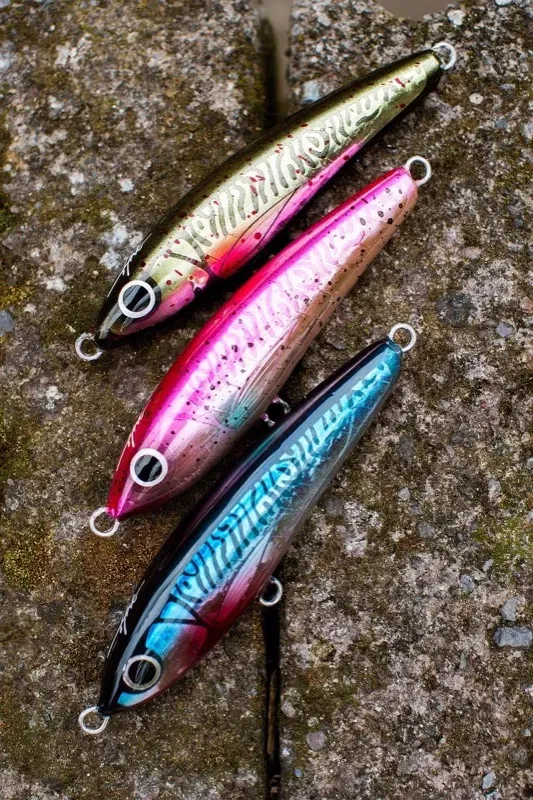
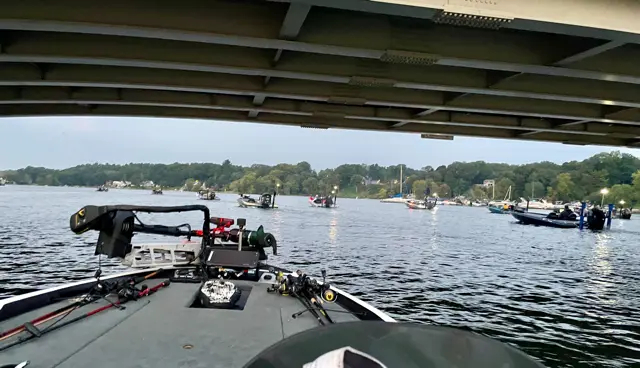
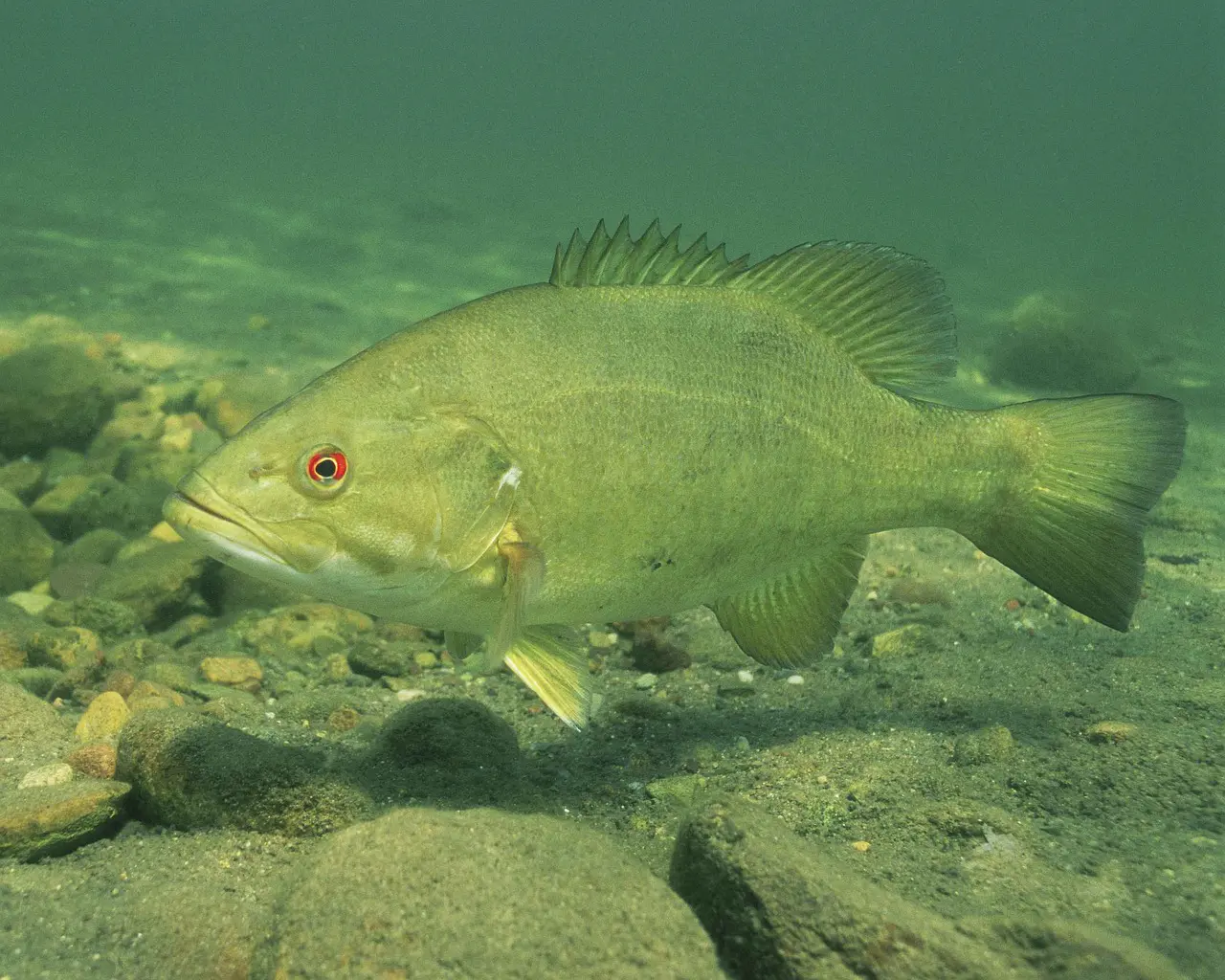
You tied on a shad-colored crankbait because the article you read said shad patterns work in summer. But the bass on your lake are keyed on two-inch bluegill fry stacked in the marina docks. Your crankbait is the right color family and the right depth, but the profile is wrong, the action is wrong, and the size is wrong. You get a few bites from curiosity, not commitment.
This is the matching problem. Choosing the right lure involves more than color and depth. It starts with identifying what the bass in your specific lake are actually eating on your specific trip date — and then selecting a lure that replicates the size, profile, and movement of that forage. Forage identification is one variable in a larger equation that includes water temperature, clarity, seasonal phase, structure, and presentation speed. But it is a variable that many anglers skip entirely, and skipping it means you are guessing at a question that has an answer.
Why Bass Are Not Random Feeders
Bass are not opportunistic scavengers that eat whatever drifts past. They are visual, pursuit-oriented predators whose feeding decisions follow predictable biological rules. Decades of stomach-content research and controlled laboratory experiments have mapped those rules in detail.
The most fundamental rule is gape limitation. In a landmark experimental study, Hambright (1991) demonstrated that largemouth bass never ingested prey with a body depth greater than the bass’s own external mouth width. Not sometimes. Never. The critical dimension is body depth — the vertical measurement of the prey, not its length. A four-inch threadfin shad and a four-inch bluegill are the same length, but the bluegill’s body depth may be twice that of the shad. A 14-inch bass can eat the shad easily. The same bass may struggle with or reject the bluegill entirely.
This has a direct practical implication: when you select a lure, the vertical profile of that lure matters as much as its length. A wide-bodied square-bill crankbait and a slim jerkbait may both be four inches long, but they represent fundamentally different forage profiles to a bass evaluating whether it can capture and swallow them.
Webb (1986) added another layer to this picture. In controlled attacks using four prey species, he found that captures were only successful when strikes landed near the prey’s center of mass. Deep-bodied prey like bluegill misdirected strikes away from the center of mass and increased escape probability. Streamlined prey like shad were geometrically easier to capture. This means bass are not just limited by gape — they are also more efficient at catching certain body shapes. A lure that matches the dominant forage shape triggers not just recognition but the predator’s highest-confidence attack mode.
How Bass Decide What to Eat: Optimal Foraging in Action
Bass do not randomly select prey from whatever is available. They follow patterns consistent with optimal foraging theory — the principle that predators evolve to maximize energy intake relative to energy spent capturing prey (Anderson, 1984).
Anderson’s experimental work showed that bass feeding behavior in structured environments closely matched the predictions of optimal foraging models. The key insight for anglers: bass in simpler habitats (sparse vegetation, open rock) tend to specialize on one prey type more quickly, while bass in complex habitats (dense grass, layered structure) maintain broader diets because multiple prey types are encountered at similar rates.
What this means on the water is that context shapes diet. A bass living on a clean gravel point with a nearby shad flat will likely specialize on shad. A bass living in a flooded willow flat with crayfish, bluegill, and the occasional shad school may eat all three on any given day. The structural complexity of where you are fishing influences how tightly the bass are locked on one forage type.
Detection also matters. Howick and O’Brien (1983) demonstrated that the distance at which bass detect prey increases with prey size and prey motion. Larger, more active forage triggers pursuit from farther away. This is why a fleeing school of shad on the surface draws bass from a wider area than a crayfish tucked under a rock. Both are food. But the detection radius is different, and so is the predator’s pursuit commitment.
Hunger level changes the equation further. Sass and Motta (2002) found that hungry bass strike with wider gape and greater suction velocity, while satiated bass show measurably reduced jaw opening speed and strike intensity. Early morning, when bass have not fed overnight, is not just better because of low light. It is better because the fish are hungrier, and hungry bass are mechanically more aggressive.
The Big Three: Shad, Bluegill, and Crayfish
In most US bass waters, three forage groups account for the vast majority of the bass diet: shad (threadfin and gizzard), sunfish (primarily bluegill), and crayfish. The relative importance of each one shifts by lake, by season, and by the bass’s size — but if you can identify which of these three is dominant on your water on your trip date, you have solved the biggest piece of the matching problem.
Shad: The Primary Forage in Reservoir Systems
In reservoirs across the South and Midwest, shad are the engine that drives the bass fishery. Storck (1986) examined 5,283 largemouth bass stomachs over four years in Lake Shelbyville, Illinois, and found that gizzard shad were the single most important prey item for age-one and older bass in every year of the study. Annual variation in the shad’s importance in bass diet reflected changes in shad availability — particularly winter die-offs and variation in summer growth rates that moved young shad into or out of the bass’s preferred prey size window.
The two common shad species offer very different predation dynamics. Threadfin shad rarely exceed four to five inches and remain vulnerable to bass predation throughout their lives. They are also highly sensitive to cold water, with die-offs common when temperatures drop below about 42°F (DeVries & Stein, 1990). These die-offs trigger some of the best winter and early spring fishing you will experience, as bass gorge on easy protein.
Gizzard shad are a different animal. Young-of-year gizzard shad grow fast — often exceeding the gape capacity of all but the largest bass within a single growing season (Michaletz, 1997). Michaletz found that temporal changes in age-0 gizzard shad size affected predator diets more than shad abundance. Even when larval gizzard shad were extremely abundant, bass essentially ignored them until they reached approximately 25 millimeters total length. Below that threshold, the energetic return was not worth the pursuit cost. Above a certain size, the shad outgrew the bass’s gape. The window of vulnerability is real and narrow.
Matching shad: Slim-profile lures in the three-to-five-inch range. Jerkbaits, swimbaits, underspins, and fluke-style soft plastics. Silver, white, and translucent color patterns. Match the swimming action — shad move with a tight, rapid tail kick, not a wide wobble.
Bluegill and Sunfish: The Structure-Oriented Forage
Bluegill and other sunfish are the second pillar of the bass diet in most waters. Unlike shad, bluegill are structure-dependent — they live in and around cover, vegetation, docks, and shallow wood. This means bass that eat bluegill tend to eat them in predictable locations tied to physical structure.
The body-depth dynamic is critical here. Bluegill are deep-bodied, laterally compressed fish. That body shape is an evolved anti-predation adaptation. Webb (1986) showed that deep-bodied prey misdirect strikes away from the center of mass, and Hambright (1991) confirmed that body depth — not length — determines whether a bass can ingest a given prey item. A three-inch bluegill has substantially more body depth than a three-inch shad. The result is that even relatively large bass can only eat small to mid-size bluegill, and once a bluegill reaches spawning size (roughly four to five inches), only the largest bass in the lake can swallow it.
Garvey and Stein (1998) found that in reservoirs where gizzard shad were rare or absent, age-0 largemouth bass switched to bluegill as their primary prey, grew rapidly, and reached larger sizes by fall. This suggests that bluegill are not just a backup forage — they are a high-quality prey item when available in the right size range.
Seasonally, bluegill become especially important as bass forage during the bluegill spawn (late spring through summer), when adult and juvenile bluegill concentrate on shallow flats and become temporarily more vulnerable.
Matching bluegill: Wider-profile lures in the two-to-four-inch range. Shallow-running square-bill crankbaits, chatterbaits with wide-profile trailers, swim jigs with broad-bodied soft plastics. Green pumpkin, bluegill-patterned, and dark perch color patterns. Fish them near structure — docks, grass edges, laydowns — where bluegill live.
Crayfish: The Bottom-Dwelling Variable
Crayfish are the most seasonally variable component of bass diet. Aggus (1973) found that crayfish were a primary food source for largemouth bass during late autumn, winter, and spring in Bull Shoals Reservoir. Schramm and Maceina (1986) documented that crayfish were common in the diet of larger largemouth bass (300mm and above) in riverine systems.
Crayfish availability to bass is shaped by the crayfish’s own behavior. Stein and Magnuson (1976) demonstrated that crayfish in the presence of bass predators suppress feeding, increase burrowing behavior, and select substrates that provide the most protection. Crayfish are not passively available — they actively avoid bass. This creates windows of vulnerability when crayfish must leave protective cover to forage, molt, or migrate. Molting crayfish are especially vulnerable because they lose their hard exoskeleton temporarily, and bass target them aggressively during these periods.
Spring is the season most commonly associated with crayfish-focused bass feeding. Pre-spawn and spawning bass occupying rocky, transitional structure encounter crayfish at high rates. The crayfish are also becoming more active as water temperatures rise, increasing their exposure to predation.
Matching crayfish: Compact, bottom-contact lures in the two-to-three-inch range. Jigs with chunk trailers, Texas-rigged craws, football jigs, and Ned rigs. Brown, green pumpkin, and orange/rust color patterns. The lure must contact the bottom and produce the irregular, darting movement that mimics a fleeing crayfish. Color should shift with the season — spring crayfish tend toward brown and olive tones; summer and fall crayfish in many waters show more red and orange as they mature.
Seasonal Forage Shifts: The Calendar Inside the Lake
Forage availability is not static. It follows a seasonal cycle driven by water temperature, reproduction timing, and prey growth rates. Understanding this cycle lets you anticipate what bass are eating before you arrive at the lake.
Winter (below 50°F): Shad die-offs in threadfin shad lakes create scavenging opportunities. Crayfish are less active but still present. Bass metabolism is low, and feeding is infrequent. Slow, compact presentations that match lethargic or dying baitfish.
Pre-spawn (50-62°F): Bass transition to staging areas near spawning flats. Crayfish become increasingly important as bass encounter them on rocky structure during the move shallow (Aggus, 1973). Jig-and-craw combinations and crawfish-imitating soft plastics excel.
Spawn (59-68°F): Nesting males eat reactively — they attack anything near the bed as a threat, not a meal. Forage matching matters less during the spawn itself. Bright, visible lures that trigger defensive strikes.
Post-spawn through summer: Young-of-year shad enter the prey window as they grow past 25mm (Michaletz, 1997). Bluegill fry and juveniles concentrate around structure. The shad spawn (typically late spring) creates massive forage concentrations in shallow water. This is prime time for shad-matching lures — swimbaits, flukes, and topwater walking baits fished near baitfish activity.
Fall: Shad schools push shallow as water temperatures cool, often concentrating in creek arms. Bass follow. This is the most obvious matching-the-hatch scenario most anglers encounter — visible surface activity, bass busting shad, and shad-imitating lures producing explosive results. Fall is also when gizzard shad that grew all summer may have outgrown the gape of many bass, shifting predation pressure to smaller threadfin or remaining age-0 gizzard shad (Storck, 1986).
Identifying Forage on Your Lake
You cannot match what you cannot identify. Here are the practical methods for determining what bass are eating on your specific water.
Observe the shallows at dawn. Baitfish activity is most visible in low-light periods. Shad dimple the surface. Bluegill pop near docks and grass. Crayfish skitter across rocks in the shallows. Five minutes of observation before your first cast tells you more than an hour of blind casting.
Watch your electronics. Modern sonar shows baitfish schools as distinct arcs or clouds. Dense shad schools on your graph mean shad are available in that area. Side imaging reveals fish holding on structure — often bluegill — that you would never see otherwise.
Check your livewell. If you catch a bass and it spits up prey, that is direct evidence. Many anglers ignore this. Do not.
Look at the structure you are fishing. Rock transitions, gravel, and chunk rock harbor crayfish. Docks, grass, and shallow wood hold bluegill. Open flats adjacent to creek channels hold shad. The structure itself predicts the forage community that lives on it. For more on reading structure, see How to Select the Right Spot for Bass Fishing.
Read local reports. Guide reports, tournament results, and local fishing forums often mention forage conditions directly. “The shad are pushing into the creeks” or “the bluegill spawn is on” are forage intelligence that shapes your lure selection before you leave the house.
Common Mismatches and How to Fix Them
The most frequent matching errors are not about color. They are about profile and size.
Mismatch 1: Lure too large for the dominant forage. If bass are eating two-inch threadfin shad and you are throwing a six-inch swimbait, you are presenting something that does not match the current prey image. Downsize. A 3.5-inch fluke or a small underspun jig head with a two-inch paddle tail will outproduce the big swimbait in this scenario.
Mismatch 2: Wrong profile for the forage type. A round-profile crankbait fished over a crayfish-dominated bottom is less effective than a jig that contacts the bottom and mimics a crayfish’s defensive posture. Conversely, a jig dragged along a flat where shad are the primary forage misses the mark — the bass are looking up, not down.
Mismatch 3: Action does not match forage behavior. Shad move with quick, erratic bursts. Crayfish hop and dart backward. Bluegill swim with a slow, fluttering tail kick. Your retrieve speed and rod action should approximate the movement pattern of the forage you are imitating. A steady retrieve matches shad. A hop-pause-hop matches crayfish. A slow swim with pauses matches bluegill.
Mismatch 4: Ignoring the forage calendar. Throwing a shad-colored jerkbait in April when the bass are staging on rock and eating crayfish is a calendar mismatch. It can still catch fish — bass are predators, and they eat opportunistically. But you are fishing against the dominant pattern instead of with it.
References
- Aggus, L.R. (1973). “Food of angler harvested largemouth, spotted and smallmouth bass in Bull Shoals Reservoir.” Proceedings of the Annual Conference of the Southeastern Association of Game and Fish Commissioners 26:519-529.
- Anderson, O. (1984). “Optimal foraging by largemouth bass in structured environments.” Ecology 65(3):851-861. doi:10.2307/1938059
- DeVries, D.R. & Stein, R.A. (1990). “Manipulating shad to enhance sport fisheries in North America: an assessment.” North American Journal of Fisheries Management 10:209-223.
- Garvey, J.E. & Stein, R.A. (1998). “Linking bluegill and gizzard shad prey assemblages to growth of age-0 largemouth bass in reservoirs.” Transactions of the American Fisheries Society 127:70-83. doi:10.1577/1548-8659
- Hambright, K.D. (1991). “Experimental analysis of prey selection by largemouth bass: role of predator mouth width and prey body depth.” Transactions of the American Fisheries Society 120:500-508. doi:10.1577/1548-8659
- Heidinger, R.C. (1976). “Synopsis of biological data on the largemouth bass Micropterus salmoides.” FAO Fisheries Synopsis No. 115. PDF
- Howick, G.L. & O’Brien, W.J. (1983). “Piscivorous feeding behavior of largemouth bass: an experimental analysis.” Transactions of the American Fisheries Society 112:508-516. doi:10.1577/1548-8659
- Michaletz, P.H. (1997). “Influence of abundance and size of age-0 gizzard shad on predator diets, diet overlap, and growth.” Transactions of the American Fisheries Society 126:101-111.
- Olson, M.H. (1996). “Ontogenetic niche shifts in largemouth bass: variability and consequences for first-year growth.” Ecology 77(1):179-190.
- Sass, G.G. & Motta, P.J. (2002). “The effects of satiation on strike mode and prey capture kinematics in the largemouth bass, Micropterus salmoides.” Environmental Biology of Fishes 65:441-454. doi:10.1023/A:1021108519634
- Schramm, H.L. & Maceina, M.J. (1986). “Distribution and diet of Suwannee bass and largemouth bass in the lower Santa Fe River, Florida.” Environmental Biology of Fishes 15:221-228. doi:10.1007/BF00002995
- Stein, R.A. & Magnuson, J.J. (1976). “Behavioral response of crayfish to a fish predator.” Ecology 57:751-761.
- Storck, T.W. (1986). “Importance of gizzard shad in the diet of largemouth bass in Lake Shelbyville, Illinois.” Transactions of the American Fisheries Society 115:21-27. doi:10.1577/1548-8659
- Webb, P.W. (1986). “Effect of body form and response threshold on the vulnerability of four species of teleost prey attacked by largemouth bass.” Canadian Journal of Fisheries and Aquatic Sciences 43:763-771.
- Wetzel, R.G. (2001). Limnology: Lake and River Ecosystems, 3rd ed. Academic Press.