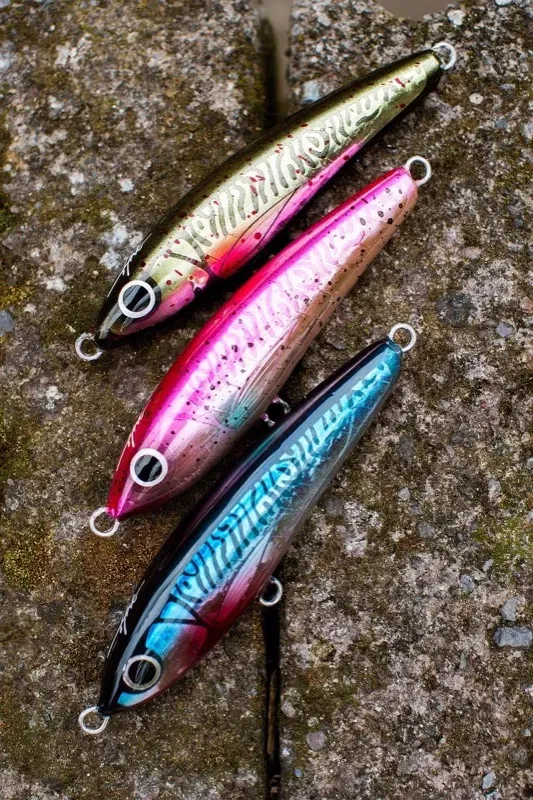
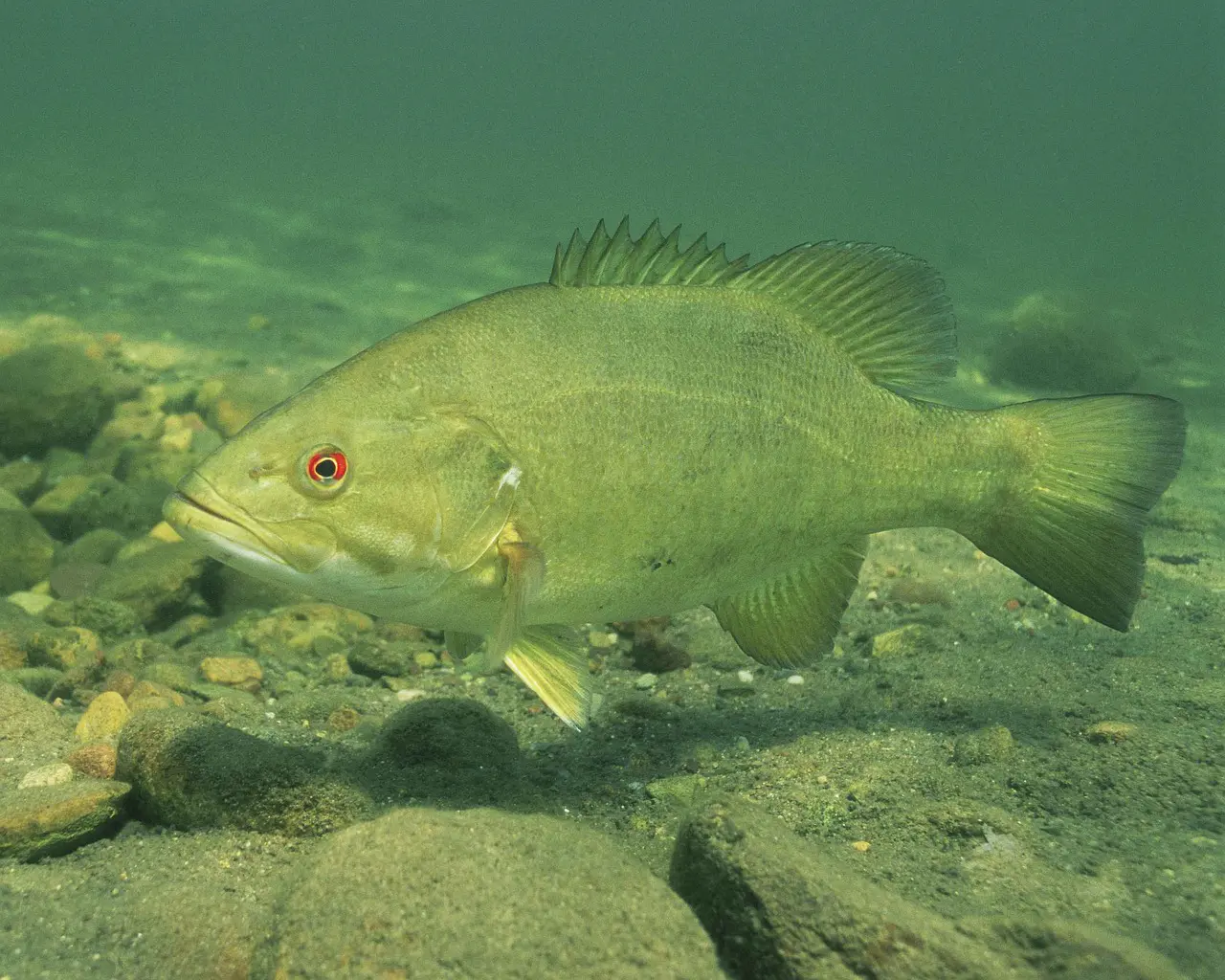
Most anglers pick a lure color for the water they are fishing and call it done. Clear water, go natural. Dirty water, go bright. That is the conventional wisdom, and it is not wrong — it is just incomplete. Water clarity does not just change which color you should throw. It changes how bass detect prey, how they strike, where they position, what they eat, and how much weight every other variable in the equation carries.
Clarity is not a primary driver like water temperature or seasonal phase. It is a modifier. It sits on top of every other variable and dials it up or down. A falling barometer in clear water produces a different pattern than the same pressure drop in stained water. A shad spawn in 2 feet of visibility plays out differently than one in 8 feet of visibility. Get clarity wrong and your entire game plan is built on the wrong assumptions — even if every other variable is dialed in.
I have fished BFL events where the winning pattern was a jerkbait on clear highland impoundments and events where the winning pattern was a black-and-blue jig in chocolate milk. Same species, same season, radically different approaches. The difference was clarity, and understanding why clarity matters at the biological level is what separates a guess from a game plan.
Measuring Water Clarity: The Secchi Disk and What It Tells You
Limnologists — the scientists who study freshwater systems — have been measuring water clarity with a Secchi disk since the 1860s. It is a simple black-and-white disk lowered on a calibrated line until it disappears. That depth is the Secchi depth, and it remains the standard field measure of water transparency worldwide [12].
For bass anglers, Secchi depth translates directly to fishing strategy:
- Clear: Secchi depth 4+ feet. Bass rely heavily on vision. Color discrimination, natural presentations, and finesse matter.
- Stained: Secchi depth 1-3 feet. Vision is reduced but still functional. Vibration and contrast begin to carry more weight.
- Muddy: Secchi depth under 1 foot. Vision is severely limited. Lateral line detection, vibration, and displacement dominate.
The photic zone — the depth where enough light exists for photosynthesis and significant visual activity — extends roughly 1.7 to 4.8 times the Secchi depth depending on the type of particles in the water [11, 12]. In a clear lake with a 6-foot Secchi reading, bass can potentially detect prey visually to 15-25 feet. In a turbid reservoir with a 6-inch Secchi reading, effective visual range collapses to inches.
That range difference reshapes every decision you make on the water.
How Light Behaves Underwater (And Why It Matters for Lure Selection)
Light does not just get dimmer as it goes deeper. It gets filtered. Water absorbs different wavelengths at different rates, and the order is consistent: red disappears first, followed by orange, then yellow, with green and blue penetrating deepest [11]. In reasonably clear freshwater, red light is functionally gone within the first 15-20 feet. By 30-40 feet, your lure is some shade of green, blue, or gray regardless of what it looked like at the surface.
But here is where clarity compounds the effect. In stained or turbid water, the absorption is accelerated and compressed. A red crankbait that still looks red at 10 feet in clear water may appear dark brown at 5 feet in stained water. The color spectrum available to bass shrinks in two dimensions simultaneously: depth and clarity.
This has direct implications for lure selection. Bass are dichromatic — they have two cone types peaking at 535 nm (green) and 614.5 nm (red), with no blue cones at all [1]. They see red as the most distinct chromatic signal and cannot distinguish chartreuse-yellow from white or blue from black. That dichromatic system evolved in green-dominated shallow freshwater environments where the available light favors exactly those wavelengths.
In clear, shallow water where the full visible spectrum is present, bass can use chromatic cues — actual color — to evaluate prey. In stained or deep water where the spectrum is truncated, they shift toward achromatic cues: brightness, contrast, and silhouette [1, 8]. This is not a choice. It is a consequence of the available light falling outside the sensitivity range of their cone cells.
Practically, this means the common advice to "match the hatch in clear water and go bright in dirty water" is directionally correct but misses the mechanism. In clear water, natural colors work because the light environment supports chromatic discrimination. In dirty water, high-contrast colors work because they maximize the achromatic signal that bass can still detect.
The Sensory Switch: Vision to Lateral Line
Bass are classified as visual predators. Under normal conditions, they detect prey by sight, orient toward it, and use a fast ram-feeding strike to capture it. But when visibility drops — whether from turbidity, depth, or darkness — something measurable changes.
Gardiner and Motta (2012) documented this in a controlled experiment that should change how every bass angler thinks about dirty water [2]. They filmed largemouth bass capturing live prey under three conditions: normal vision, vision blocked (infrared light), and lateral line disabled (cobalt chloride treatment). The results were striking:
- Without vision, bass switched from ram-feeding to suction-feeding. They approached prey more slowly but generated greater buccal pressure — essentially vacuuming prey in from close range rather than chasing it down.
- Without lateral line, bass compensated with faster forward velocity and struck earlier in the gape cycle.
- With both systems intact, bass used the optimal combination: visual tracking for detection and orientation, lateral line for final strike timing.
This is the biological mechanism behind the oldest rule in turbid-water bass fishing: slow down and use vibration. It is not folklore. Bass physically change their feeding strategy when they cannot see. They shift from pursuit predators to ambush predators, and they rely on water displacement sensed through the lateral line — a row of pressure-sensitive neuromasts along both flanks — to detect and intercept prey at close range [2, 17].
The practical implication is that in low-visibility water, your lure needs to do two things. First, it needs to displace enough water for a bass to detect it through its lateral line from a reasonable distance. Second, it needs to be moving slowly enough for a bass using suction-feeding mechanics to actually capture it. A buzzbait ripped across the surface of muddy water ticks the first box but fails the second. A slow-rolled Colorado-blade spinnerbait ticks both.
Reactive Distance: The Number That Changes Everything
If there is one metric that quantifies what clarity means for bass fishing, it is reactive distance — the distance at which a predator first detects and orients toward prey. Sweka and Hartman (2003) measured this in smallmouth bass across a range of turbidity levels and found an exponential decline: from 65 cm in clear water to just 10 cm at the highest turbidity [6]. That is an 85% reduction in the zone where a bass even registers that your lure exists.
Howick and O'Brien (1983) established the baseline for largemouth bass: detection distance increases with prey size, prey motion, and light intensity [7]. Larger, faster-moving objects are detected from farther away. But turbidity compresses all of those relationships. A big swimbait that a bass spots from 6 feet away in clear water might only be detected at 18 inches in turbid water.
Vogel and Beauchamp (1999), studying lake trout — another visual predator with comparable detection mechanics — quantified the combined effects, showing that reaction distance declines as a decaying power function of turbidity — meaning the first jump in turbidity causes the biggest drop, and additional turbidity has diminishing (but still significant) impact [13]. Going from crystal clear to slightly stained costs you more detection range than going from stained to muddy.
This has a cascading effect on lure presentation:
- In clear water, bass detect lures from a distance and have time to evaluate. Unnatural movement, wrong profile, or wrong color can trigger rejection before a strike. Finesse matters.
- In stained water, bass detect lures at closer range and have less evaluation time. The decision window compresses. Reaction baits — crankbaits deflecting off cover, spinnerbaits flashing past a laydown — trigger instinctive strikes before the fish can assess.
- In muddy water, detection is so close that the bass is essentially committed once it detects the lure. Your job is getting the lure close enough to be detected at all. Coverage and vibration trump everything.
What Bass Eat Changes With Clarity
Turbidity does not just change how bass find prey — it changes what they catch. Shoup and Wahl (2009) tested largemouth bass predation on three prey types (gizzard shad, bluegill, and crayfish) across four turbidity levels [5]. The diet shift was systematic:
- At 0-5 NTU (clear to slightly stained): Bass consumed mostly fast-moving shad and bluegill. They could track and overtake quick prey with their visual ram-feeding strategy. Crayfish showed negative selectivity.
- At 10 NTU (moderately turbid): All three prey types were consumed equally. Bass struggled to catch fast prey and began selecting whatever was available.
- At 40 NTU (muddy): Overall foraging rate dropped substantially. Bluegill — the slowest-moving prey — were selected most often. The combination of reduced visibility and suction-feeding mechanics made slow prey the most efficient target.
This maps directly onto lure strategy. In clear water, a fast-moving swimbait or jerkbait imitating a fleeing shad is a high-percentage play because bass are equipped to run it down. In dirty water, a slow-falling jig or a creature bait dragged along the bottom imitates the slow, bottom-oriented prey that bass are actually catching. The lure should match not just the forage but the predation style that clarity dictates.
Shoup and Lane (2015) expanded this to field conditions and found an important nuance: real-world consumption rates did not always decline at higher turbidity, because other environmental variables interacted with clarity in ways that altered bass behavior [4]. Temperature, cover availability, prey density, and current all modified the turbidity effect. This is the Variable Equation at work — clarity is one dial, and it interacts with every other dial on the panel.
The Prey Side of the Equation
Clarity does not just affect how bass hunt. It changes how prey behave, and those behavioral shifts create opportunities that do not exist in clear water.
Miner and Stein (1996) measured how small bluegills responded to the presence of a largemouth bass predator across turbidity levels [9]. In clear water, bluegills hugged cover and stayed in shallow, protected habitat — they could see the bass and acted accordingly, spending less than 20% of their time in open deep water. At turbidities above 10 NTU, that flipped: bluegills spent more than 80% of their time in open water because they could no longer detect the predator.
For bass anglers, this is critical intelligence. In clear water, forage is pinned to cover. Bass have to dig prey out of docks, brush piles, and grass edges. In dirty water, forage roams freely in open areas because the visual refuge of turbidity replaces the physical refuge of structure. This means bass in turbid water are often positioned differently than you would expect — patrolling open flats, cruising mid-depth, intercepting prey that has wandered away from cover.
If you have ever fished a muddy flat and been surprised to catch bass in what looks like "nothing" water — no visible cover, no obvious structure — this is why. The turbidity itself is the cover, and prey behavior shifts accordingly.
Three Clarity Worlds: Strategy by Visibility
Clear Water (Secchi Depth 4+ Feet)
Clear water makes bass more cautious, more selective, and harder to fool — but more predictable in their positioning. They relate tightly to structure and cover because visibility allows prey to avoid open water. Bass hold on edges: weedlines, rock transitions, dock shade, drop-offs where they can ambush from shadow into light.
Presentation adjustments:
- Natural, translucent colors. Green pumpkin, watermelon, shad patterns. Let bass use their chromatic vision to evaluate the lure as "food" rather than "threat."
- Lighter line. Fluorocarbon in the 8-12 lb range for finesse. Bass can see your line in clear water, and line-shy fish are not a myth — they are a measured behavioral response to unnatural visual cues.
- Longer casts and subtle presentations. Approach from a distance. The same reactive distance that lets bass detect prey from far away also lets them detect your boat, trolling motor, and shadow.
- Dawn, dusk, and overcast are force multipliers. In low light, bass shift to rod-mediated (monochrome) vision and become more aggressive [8]. The same clear lake that requires finesse at noon can be fished with moving baits at first light.
Stained Water (Secchi Depth 1-3 Feet)
Many tournament anglers consider stained water the sweet spot. Bass are aggressive enough to react to lures without extensive evaluation, but they can still use vision to some degree. You get the benefits of both sensory systems — vision for detection, lateral line for strike commitment.
Presentation adjustments:
- Higher contrast colors. Black-and-blue, chartreuse-and-white, red and black. Maximize the achromatic signal while the chromatic spectrum is still partially available.
- Moderate retrieval speed. Fast enough to trigger reaction strikes, slow enough for the suction-feeding component that kicks in as visibility drops.
- Vibration becomes a primary attractant, not a bonus. Spinnerbait blades, rattles in lipless cranks, and the thump of a chatterbait blade all send detectable signals through the lateral line.
- Gold outperforms silver on spinner blades. Tannin-stained water (common across the Southeast) absorbs blue wavelengths preferentially, so gold — which reflects warm-spectrum light — maintains visibility longer than silver, which reflects the blue light the tannins have already filtered out [11].
Muddy Water (Secchi Depth Under 1 Foot)
In true muddy water, the rules change fundamentally. Vision is a secondary sense at best. Bass are hunting by lateral line and are positioned to intercept prey at extremely close range.
Presentation adjustments:
- Maximum vibration and water displacement. Colorado-blade spinnerbaits, vibrating jigs, rattling lipless crankbaits, large-profile creature baits. If it does not push water, a bass cannot find it.
- Solid, high-contrast colors. Black, white, black-and-chartreuse. Forget subtle patterns — visibility is measured in inches.
- Slow down. This contradicts the instinct to cover water, but it aligns with the biology. Bass using suction-feeding mechanics need the lure within inches, and they need time to orient. A slow-rolled spinnerbait that stays in the strike zone for 3 seconds gives a bass time to detect, orient, and commit. A fast-retrieved lure might pass through the 10-centimeter reactive distance before the bass can respond [6].
- Fish shallow. In muddy water, most available light is concentrated in the top few feet. Bass position shallow to maximize their remaining visual capability. Bank lines, riprap, shallow flats, and anything that puts bass between the surface and the bottom in 2-5 feet of water becomes productive.
Seasonal Clarity Changes: When the Equation Shifts
Clarity is not static. It changes with the seasons, and each change reshapes the bass fishing equation.
Spring runoff is the most dramatic clarity event on many reservoirs. Snowmelt and rain wash sediment into feeder creeks, creating a turbidity gradient from muddy creek arms to clearer main-lake water. Bass staging for the spawn often position along these clarity transitions — just clear enough to see, just stained enough to feel secure on beds. Pre-spawn bass may push farther back into dirtier water where it is warmer, using the same turbidity gradient as a thermal corridor.
Spring turnover mixes the entire water column, temporarily reducing clarity lake-wide as bottom sediments and decomposing material get suspended. This is followed by a diatom bloom, which zooplankton graze down by mid-spring, creating a brief "clear-water phase" with the year's highest Secchi readings [12, 15].
Summer algal blooms progressively reduce clarity through the warm months. Cyanobacteria (blue-green algae) thrive in warm, nutrient-rich water and can reduce Secchi depths dramatically. Beyond the clarity impact, dense blooms create dissolved oxygen problems when they die off — the decomposition consumes oxygen and can create hypoxic dead zones that force bass to relocate, sometimes compressing them into narrow bands of habitable water [15, 18].
Fall turnover remixes the water column again, temporarily reducing clarity before the lake stabilizes for winter. In many reservoirs, fall turnover marks a brief window of poor clarity followed by the clearest water of the year through winter.
Each of these transitions changes the weight that clarity carries in your game plan. A pattern that works in the clear-water phase of May may need complete revision when algae blooms reduce visibility by half in July — even though temperature, structure, and forage have not changed dramatically.
Putting It All Together: The Variable Equation
Water clarity is not a standalone variable. It is a modifier that sits on top of every other factor and changes how they express themselves. High water temperature in clear water means bass seek shade, depth, and current. High water temperature in stained water means bass can tolerate shallower positions because the reduced light penetration effectively creates shade everywhere.
A falling barometer in clear water might push bass toward reaction baits fished near cover edges. The same pressure drop in muddy water might push bass to the shallowest available bank, feeding actively because the turbidity gives them confidence to roam.
This is why "water clarity" is a field in the Lake Intelligence Report — it is not a nice-to-know detail. It is a modifier that changes the weight of every other data point in the analysis. When you tell the report your water is stained, it adjusts lure recommendations, depth targeting, and presentation speed. When you tell it the water is clear, it shifts toward finesse, natural patterns, and low-light windows.
No single variable tells the whole story. The report weighs water clarity alongside water temperature, barometric pressure, solunar periods, seasonal phase, weather forecast, reservoir levels, and web intelligence from your specific lake. That is the Variable Equation — and clarity is the modifier that changes the value of everything else.
References
- Mitchem, L.D., et al. (2018). "Seeing red: color vision in the largemouth bass." Current Zoology 65(1):43-52. PMC6347066
- Gardiner, J.M. & Motta, P.J. (2012). "Largemouth bass switch feeding modalities in response to sensory deprivation." Zoology 115(2):78-83. PubMed
- Kawamura, G. & Kishimoto, T. (2002). "Color vision, accommodation and visual acuity in the largemouth bass." Fisheries Science 68:1041-1046.
- Shoup, D.E. & Lane, W.D. (2015). "Effects of turbidity on prey selection and foraging return of adult largemouth bass in reservoirs." NAJFM 35(5):913-924. Wiley
- Shoup, D.E. & Wahl, D.H. (2009). "The effects of turbidity on prey selection by piscivorous largemouth bass." Trans. Am. Fish. Soc. 138(5):1018-1027. Taylor & Francis
- Sweka, J.A. & Hartman, K.J. (2003). "Reduction of reactive distance and foraging success in smallmouth bass exposed to elevated turbidity levels." Env. Bio. Fishes 67:341-347. Springer
- Howick, G.L. & O'Brien, W.J. (1983). "Piscivorous feeding behavior of largemouth bass: an experimental analysis." Trans. Am. Fish. Soc. 112(4):508-516. Wiley
- McMahon, T.E. & Holanov, S.H. (1995). "Foraging success of largemouth bass at different light intensities." J. Fish Biology 46:759-767. Wiley
- Miner, J.G. & Stein, R.A. (1996). "Detection of predators and habitat choice by small bluegills: effects of turbidity and alternative prey." Trans. Am. Fish. Soc. 125(1):97-103.
- De Robertis, A., et al. (2003). "Differential effects of turbidity on prey consumption of piscivorous and planktivorous fish." Can. J. Fish. Aquat. Sci. 60(12):1517-1526. NRC
- Kirk, J.T.O. (1994). Light and Photosynthesis in Aquatic Ecosystems. 2nd ed. Cambridge University Press.
- Wetzel, R.G. (2001). Limnology: Lake and River Ecosystems. 3rd ed. Academic Press.
- Vogel, J.L. & Beauchamp, D.A. (1999). "Effects of light, prey size, and turbidity on reaction distances of lake trout to salmonid prey." Can. J. Fish. Aquat. Sci. 56(7):1293-1297. NRC
- Newcombe, C.P. & Jensen, J.O.T. (1996). "Channel suspended sediment and fisheries: a synthesis for quantitative assessment of risk and impact." NAJFM 16(4):693-727.
- EPA. "Effects: Environment — Nutrient Pollution." EPA
- Helfman, G.S. (1981). "Twilight activities and temporal structure in a freshwater fish community." Can. J. Fish. Aquat. Sci. 38:1405-1420.
- Sass, G.G. & Motta, P.J. (2002). "The effects of satiation on strike mode and prey capture kinematics in the largemouth bass." Env. Bio. Fishes 65:441-454. Springer
- WHOI. "Harmful Algal Blooms — Ecosystems." WHOI