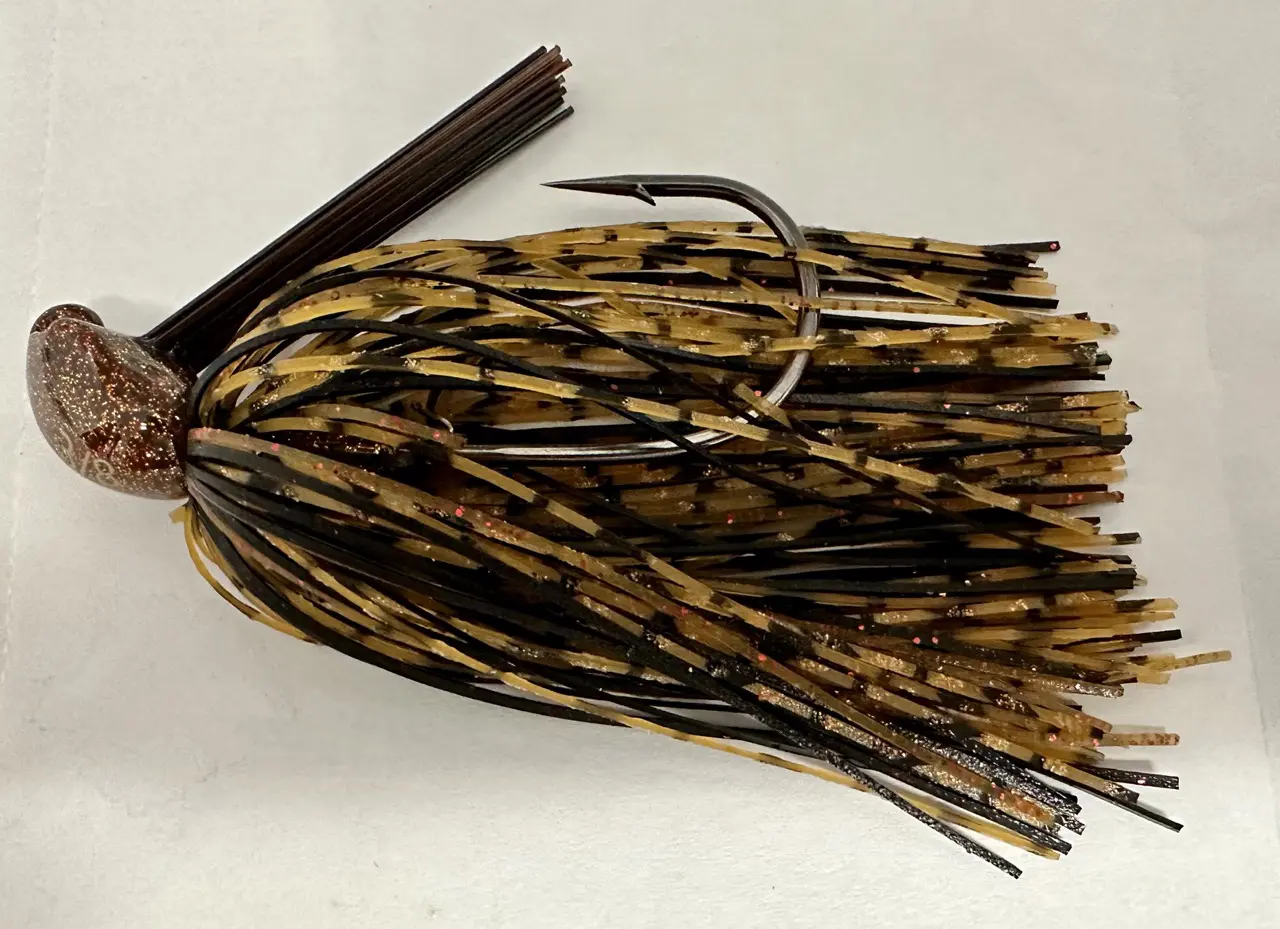
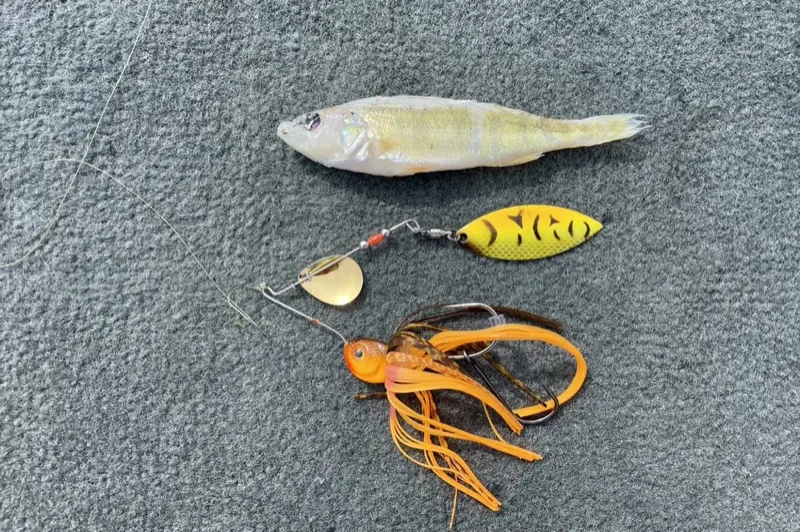
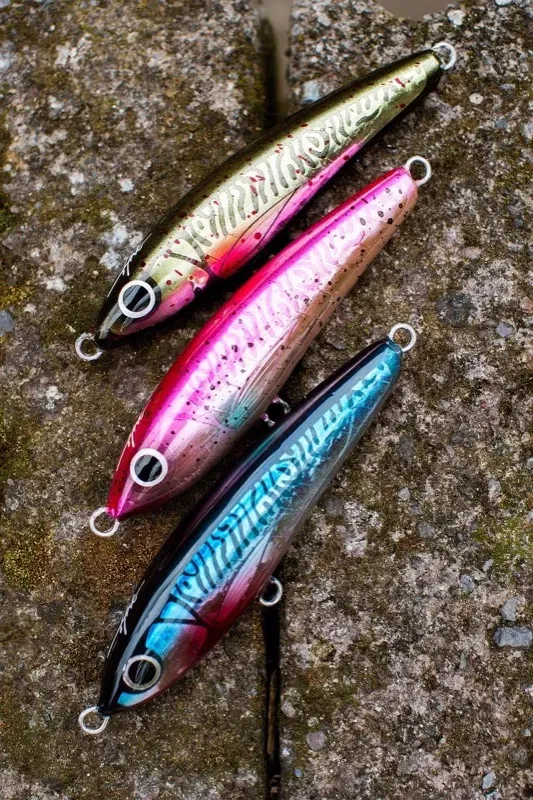
A jig is probably the most versatile lure in bass fishing. But "throw a jig" is about as useful as "go catch a fish." There are at least eight distinct jig categories, each designed for a specific combination of depth, cover, forage, and presentation speed. The right jig depends on a lot of variables working together — depth, cover density, water clarity, seasonal phase, forage type, and how bass are positioned in the water column. No single factor picks your jig. The equation does.
Here is how to think through each type, what makes them different mechanically, and when each one earns a spot on your deck.
Why Jigs Catch Bass: The Biology Behind the Bite
Before we get into specific types, it helps to understand why jigs are so effective at triggering strikes.
Bass detect prey through their lateral line system — a row of sensory organs (called neuromasts) running from the gill plate to the tail along each side of the body. These neuromasts are tuned to detect low-frequency vibrations in the 1-200 Hz range [1]. Canal neuromasts, concentrated on the head and trunk, are the primary sensors for prey detection and localization — research on mottled sculpin demonstrated that canal neuromasts alone are sufficient for a fish to localize a small vibrating source [2].
Why does this matter for jigs? A jig dragged across rock, gravel, or wood creates low-frequency vibrations in exactly that detection range. The skirt flutters. The head ticks against substrate. A craw trailer's appendages pulse. All of this registers on the lateral line as "something alive and edible is moving along the bottom." Crayfish themselves produce detectable substrate vibrations when they locomote across hard bottom — their mechanoreceptors show highest sensitivity below 150 Hz [3], and their chelae (claws) can detect waterborne vibrations transmitted through substrate [4]. A jig dragging over rock mimics that signature. Crayfish also use hydrodynamic cues to orient toward prey fish [5], which means the vibration language between predator and prey runs in both directions — and a jig speaks that language.
This is also why jig weight, head shape, and skirt material are not just tackle preferences. They change the vibration profile, fall rate, and bottom contact pattern — which changes what the bass's lateral line "sees." And it matters because crayfish are a dominant forage — studies of largemouth bass diet in reservoir systems found crayfish comprised 57% of stomach contents by weight [6]. Bass are wired to detect crayfish-like signals, and jigs deliver them.
Swim Jigs
A swim jig is designed to move horizontally through the water column, imitating a swimming baitfish or bluegill. The head is typically bullet-shaped or pointed, allowing it to deflect off cover rather than hang up.
Key specifications
- Weight: 1/4 to 1/2 oz. Lighter (1/4 oz) for shallow water and slow retrieves. Heavier (3/8-1/2 oz) for deeper slow-rolling or fishing through current [7].
- Hook: Light to medium wire, narrow gap. Because bass hit swim jigs on the move, the hook needs to penetrate quickly with minimal force [8].
- Weed guard: Light fiber guard. Enough to slide past vegetation and laydowns without snagging, thin enough not to reduce hookup percentage.
- Skirt: Silicone, full or half-cut depending on profile preference.
When it earns a spot: Bass are actively feeding, positioned in or near cover (docks, grass edges, laydowns), and water temps are warm enough for an aggressive retrieve. Swim jigs shine when bass are chasing — pre-spawn through fall. Pair with a swimbait or paddletail trailer for maximum vibration and profile.
Rod/reel: 7'0" medium-heavy baitcaster, 15-20 lb fluorocarbon or braid with fluorocarbon leader.
Football Jigs
The football jig has a wide, flat-bottomed head shaped like a football oriented perpendicular to the hook. That shape serves two purposes: it maximizes bottom contact area for sensitivity (you feel every change in substrate composition), and it causes the jig to rock side-to-side when dragged, creating a natural crawfish-like motion [9].
Key specifications
- Weight: 3/8 to 1 oz. Use 3/8-1/2 oz for 5-15 ft. Use 1/2-3/4 oz for 10-20 ft. Go to 1 oz for 20-30+ ft or when fishing in current [9, 10].
- Hook: Medium-heavy wire for hookset power at depth through heavy fluorocarbon.
- Weed guard: Minimal or none in open water. Light fiber guard if fishing near sparse cover.
- Skirt: Full silicone skirt, usually in craw-imitating colors (green pumpkin, brown/orange, PB&J).
When it earns a spot: Summer and fall when bass move offshore to points, ledges, humps, and channel swings. Football jigs excel on hard bottom — rock transitions, gravel, clay, and rip rap. Pay attention to changes in bottom composition. When you feel the substrate shift from mud to rock or gravel to chunk rock, slow down. That transition is where crayfish concentrate, and bass know it [9].
Rod/reel: 7'2"-7'6" medium-heavy, moderate-fast action. 12-17 lb fluorocarbon.
Flipping Jigs
A flipping jig is built to enter heavy shallow cover and come back out without hanging up. The head is typically a compact arrowhead or flat shape designed to slide through wood, brush, and grass. The weed guard is heavier — thicker fiber, more strands — because cover penetration without snagging is the priority [8].
Key specifications
- Weight: 3/8 to 1/2 oz for most applications. Go heavier (3/4 oz) in current or deeper grass.
- Hook: Heavy gauge, wide gap. This is the heaviest hook gauge of any jig category [8].
- Weed guard: Heavy fiber guard, multiple strands [11]. Anglers commonly trim the guard to fine-tune weedlessness vs. hookup ratio.
- Skirt: Full silicone skirt for maximum profile in murky or stained water.
When it earns a spot: Shallow cover — laydowns, brush piles, dock pilings, shoreline grass, standing timber. Water depths under 10 ft. For technique details on flipping and pitching, see our jig fishing basics guide.
Rod/reel: 7'3"-7'6" heavy power, fast action. 50-65 lb braid.
Punch Jigs
A punch jig is a specialized heavy-cover tool designed to break through matted surface vegetation — hydrilla mats, lily pad canopies, grass mats — and reach bass staging underneath [12].
Key specifications
- Weight: 1 to 1.5 oz standard. Up to 2 oz for extremely thick mats. Professional anglers report using 1 oz approximately 70% of the time, 1.5 oz about 25%, and 2 oz only 5% [12].
- Hook: Heavy gauge flipping hook, often a straight shank for compact penetration.
- Weed guard: Compact, positioned at a sharper angle for a tighter profile.
- Material: Tungsten is strongly preferred — the 1.7x density advantage over lead means a smaller head at the same weight, which punches through mats cleaner [13].
When it earns a spot: Matted vegetation in summer and early fall. Regional technique — heavily used in the South and Southeast. Bass hold under mats for shade, oxygen, and ambush positioning.
Rod/reel: 7'3"-7'6" heavy or extra-heavy power. 65 lb braid minimum.
Finesse Jigs
A finesse jig is a scaled-down, subtle presentation for pressured fish, clear water, or cold conditions. Everything is smaller — head, hook, skirt, profile.
Key specifications
- Weight: 3/16 to 3/8 oz. The lightest skirted jig category [8].
- Hook: Light wire, smaller gap. Matched to spinning tackle and lighter line.
- Weed guard: Light fiber, minimal.
- Skirt: Cut-back ("spider cut") or collared skirt for a compact profile.
When it earns a spot: High-pressure lakes, extremely clear water, post-frontal conditions, and cold water. Cast to specific targets — brush piles, isolated rock, dock shade lines — and work the jig slowly with subtle hops and pauses.
Rod/reel: 6'10"-7'2" medium or medium-light spinning rod. 6-10 lb fluorocarbon or braided line with 6-8 lb fluorocarbon leader.
Ned Rig (Mushroom Head Jigs)
The Ned rig deserves its own category. Popularized by Ned Kehde and refined over the last decade, this mushroom-head jig paired with a short stick bait has become one of the most consistent bass-catching presentations in modern fishing [14]. For a deeper look at the Ned rig alongside other soft plastic finesse techniques, see our dedicated guide.
Key specifications
- Weight: 1/16 to 1/4 oz. Most anglers stay in the 1/8-3/16 oz range [14].
- Hook: Light wire, round bend, #1-#3 size. EWG options available for weedless rigging [14].
- Head shape: Mushroom (round with flat back). When the jig sits on bottom, the buoyant plastic stands the bait upright — mimicking a feeding crayfish or foraging baitfish [14].
- Soft plastic: 2.5-3.5 inch stick bait, finesse craw, or TRD-style bait.
When it earns a spot: Pressured fish, clear water, tough bites, smallmouth, spotted bass, and situations where bigger presentations are getting refused.
Rod/reel: 6'10"-7'2" medium-light spinning rod, extra-fast tip. 6-8 lb fluorocarbon or light braid to fluorocarbon leader.
Vibrating Jigs (Chatterbaits)
A vibrating jig combines a jig head with a hexagonal or coffin-shaped blade that vibrates and wobbles on retrieve. The blade creates a unique combination of flash, vibration, and erratic movement that triggers reaction strikes [15].
Key specifications
- Weight: 3/8 to 3/4 oz. 3/8 and 1/2 oz cover most situations.
- Hook: Medium-heavy wire (similar to swim jig).
- Blade: The defining component. Blade size and shape determine vibration intensity and retrieve speed range.
- Skirt: Silicone, usually full. Some anglers trim for a compact profile in clear water.
When it earns a spot: Pre-spawn through fall, when bass are aggressive or positioned near grass edges, flats, and transition areas. Effective in stained to muddy water where blade vibration helps bass locate the bait through their lateral line [1, 15]. Also effective in clear water with a subtle, deflecting retrieve around isolated cover.
Rod/reel: 7'0"-7'3" medium-heavy, moderate or moderate-fast action. 12-17 lb fluorocarbon or braid with fluorocarbon leader.
Hair Jigs
Hair jigs use natural or synthetic fibers — marabou, bucktail, or blended synthetics — instead of silicone skirts. The material difference matters most in cold water.
Key specifications
- Weight: 1/16 to 1/4 oz for smallmouth finesse; 1/4 to 3/8 oz for largemouth [16, 17].
- Hook: Light to medium wire, typically a round jig hook.
- Head shape: Round or mushroom for finesse; aspirin-head for swimming applications.
- Material distinction: Marabou "breathes" with micro-currents even at rest. Bucktail is more durable and maintains action across all water temperatures [16, 17].
Why cold water matters: Silicone skirts stiffen and clump below approximately 50 degrees F, dramatically reducing their action. Natural hair fibers continue to undulate and pulse in cold water [17]. This is why hair jigs outperform skirted jigs in late fall, winter, and early spring.
When it earns a spot: Water temperatures below 55 degrees F, smallmouth bass, and any situation where subtle, lifelike movement outperforms bulk and vibration.
Rod/reel: 7'0"-7'6" medium-light spinning rod, extra-fast action. 6 lb braid to 8 lb fluorocarbon leader [17].
Jig Trailers: The Other Half of the Equation
A bare jig catches fish, but a trailer changes the entire presentation. The trailer affects profile, fall rate, action, and what the jig imitates.
Craw-style trailers: Two appendages that flap and pulse on the fall. Slower descent due to appendage drag. Best paired with football jigs, flipping jigs, and finesse jigs — bottom-contact presentations where you want to mimic a crayfish [18].
Swimbait / paddletail trailers: Single boot-tail or paddle that kicks on retrieve. Faster fall rate than craw trailers on the same jig head. Best paired with swim jigs and vibrating jigs — horizontal, swimming presentations [18].
Chunk / grub trailers: Compact, moderate action. A versatile middle ground when you want profile without dramatically changing fall rate.
The fall rate principle: Trailer size directly affects how fast your jig sinks. A larger, bulkier trailer adds buoyancy and slows the fall. A compact trailer falls faster [18].
Color matching: Match trailers to local forage. Green pumpkin and watermelon for crayfish. White and shad patterns for baitfish. In stained water, darker colors (black/blue, junebug) create a stronger silhouette. See our lure color guide for the full science.
Tungsten vs. Lead: The Material Decision
Tungsten is approximately 1.7 times denser than lead [13]. That density difference creates three practical advantages:
- Smaller profile at the same weight. A 1/2 oz tungsten head is noticeably smaller than a 1/2 oz lead head. This matters in clear water, for finesse presentations, and for punch jigs breaking through mats.
- Faster, more vertical fall. Higher density means the jig drops faster and tracks straighter through the water column [13].
- Better sensitivity. Tungsten is harder than lead and transmits vibrations more efficiently through the line to your rod [13].
There is also an environmental dimension: lead tackle ingested by waterfowl and other wildlife is a documented toxicity concern, and tungsten is considered a non-toxic alternative [19].
The tradeoff is cost — tungsten jigs typically run 3-5 times the price of lead equivalents. Many anglers reserve tungsten for applications where the advantages matter most: deep football jigs, punch jigs, and finesse presentations.
Picking the Right Jig: The Multi-Variable Decision
Jig selection is never about one factor. It is an equation that weighs several variables together:
- Cover type determines weed guard weight and head shape (flipping jig for wood, football for rock, swim jig for grass edges).
- Depth sets the weight range (heavier for deeper, lighter for shallow).
- Water clarity influences skirt bulk and color (full skirt with vibration for stained water, compact finesse profile for clear).
- Seasonal phase and water temperature guide presentation speed and material (hair jigs in cold water, power presentations in warm water).
- Forage drives trailer selection and color (craw trailers over rock, swimbait trailers around baitfish).
- Bass positioning — bottom, suspended, or shallow cover — determines whether you need a vertical, horizontal, or punching presentation.
No single variable picks your jig. The conditions on your specific lake, on your specific day, at your specific depth — that is what narrows eight categories down to one. This is one variable in a larger equation. The question is always: how much weight does each factor carry today?
References
- ScienceDirect — "Lateral Line (Neuroscience Overview)." Link
- Coombs, S. & Conley, R.A. (1997). "Dipole source localization by mottled sculpin." J. Comp. Physiol. A 180:387-399. Link
- Breithaupt, T. & Tautz, J. (1990). "The Sensitivity of Crayfish Mechanoreceptors to Hydrodynamic and Acoustic Stimuli." In Frontiers in Crustacean Neurobiology (Springer). Link
- Tautz, J. & Sandeman, D.C. (1980). "The Detection of Waterborne Vibration by Sensory Hairs on the Chelae of the Crayfish." J. Exp. Biol. 88:351-356. Link
- Breithaupt, T. (1998). "Hydrodynamic orientation of crayfish to swimming fish prey." J. Comp. Physiol. A 183:307-314. Link
- Aggus, L.R. (1973). "Food of angler harvested largemouth, spotted and smallmouth bass in Bull Shoals Reservoir." SEAFWA Proceedings.
- Wired2Fish — "A Quick Guide to Skirted Jigs for Bass Fishing." Link
- Tackle Warehouse — "How to Choose the Right Jig." Link
- Tackle Warehouse — "Football Jig Gear Guide." Link
- Omnia Fishing — "Football Jigs for Catching Big Bass." Link
- Barlow's Tackle — "Fiber Weed Guards for Jigs." Link
- Wired2Fish — "A Crash Course in Punching for Big Bass." Link
- MidWest Outdoors — "Tungsten vs. Lead: Which Is Best?" Link
- Wired2Fish — "Ned Rigs: The Complete Guide." Link
- Ultimate Bass — "Vibrating Jig Fishing." Link
- Major League Fishing — "How to Catch Smallmouths with Hair Jigs." Link
- In-Fisherman — "Hair Jigs for Smallmouth Bass." Link
- Wired2Fish — "How to Pick the Right Swim Jig Trailers." Link
- Pokras, M.A. & Kneeland, M.R. (2009). "Lead Poisoning: Using Transdisciplinary Approaches." PMC (PMC6675807). Link