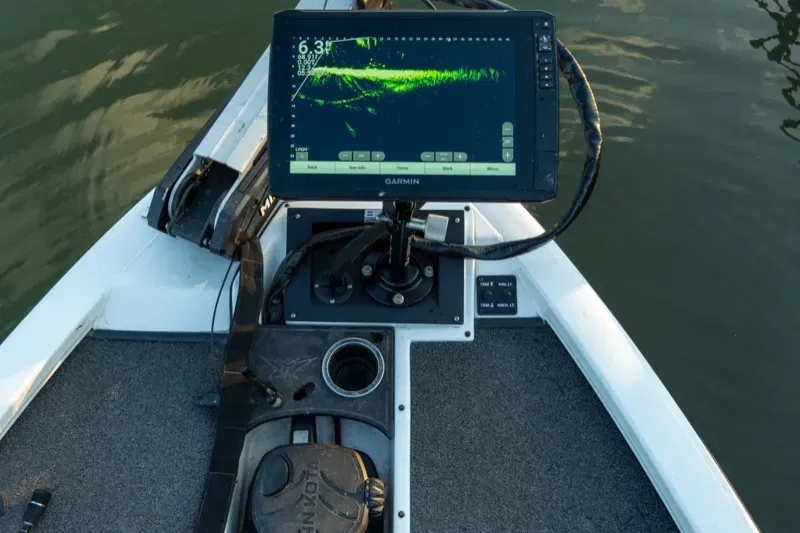
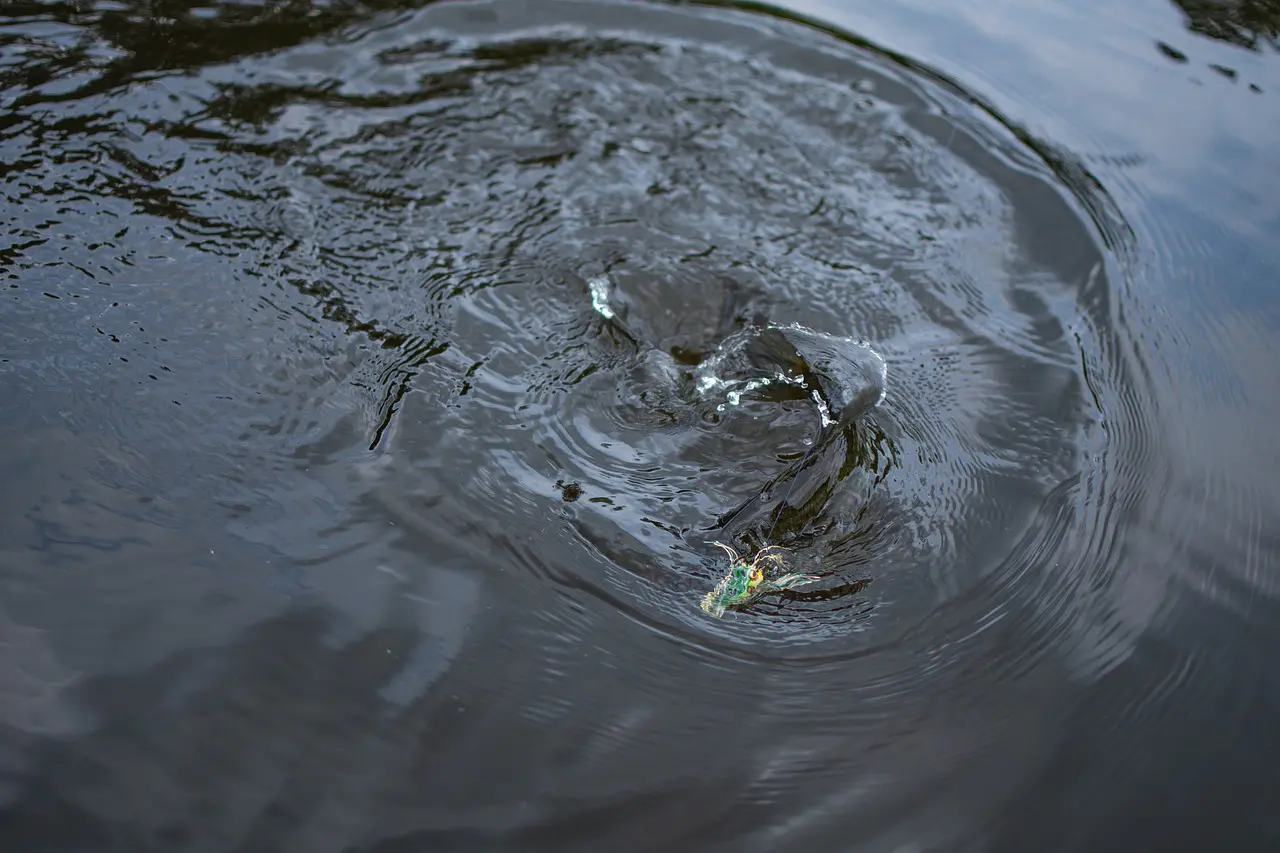
Bass fishing after dark is not guesswork. It is applied sensory ecology. When the sun drops below the horizon, the entire predator-prey equation shifts -- which senses dominate, which forage is accessible, which patterns produce, and how much weight every variable carries all change in ways that the science can quantify. Night fishing success depends on understanding those shifts, not on folklore about full moons and secret lures.
Here is what the research actually says about bass behavior after dark, how lunar cycles fit into the equation, and how to build a night fishing strategy grounded in biology rather than tradition.
Bass Are Crepuscular Predators, Not Nocturnal Ones
The most important thing to understand about night fishing is that bass are not truly nocturnal. They are crepuscular -- meaning their peak feeding activity centers on twilight, not midnight.
McMahon and Holanov (1995) tested largemouth bass foraging success across a range of light intensities in controlled laboratory trials. Their findings showed that capture rates remained above 95% across a wide range from daylight through moonlight levels, then dropped sharply to 62% at starlight and near zero in total darkness [1]. Bass maintain high foraging efficiency well into low-light conditions but become significantly impaired once ambient light drops below moonlight levels.
Helfman (1981) documented this at the community level. His study of freshwater fish communities found that twilight is the most ecologically significant period of the day -- a roughly 30-minute window where predator-prey roles reorganize, activity peaks, and the entire community structure shifts [2]. Bass are part of that reorganization. They become more active as light drops, exploit the confusion of the transition, and then gradually reduce activity as full darkness sets in.
This does not mean bass stop feeding at night. It means their feeding efficiency declines once light drops below moonlight levels. The first two hours after sunset and the last hour before sunrise are the highest-probability windows. Plan your night sessions around those transitions and you stack the odds in your favor before you tie on a lure.
How Bass See in the Dark -- and When They Stop Seeing
Understanding the bass visual system explains why the twilight-to-dark transition matters so much.
Largemouth bass have a dual photoreceptor system. In daylight, cone cells handle color vision -- single cones peaking at 535 nm (green) and twin cones at 614 nm (red) [3]. As light fades, rod cells become the dominant photoreceptors. Rod cells in bass peak at 528 nm, which means night vision is essentially monochromatic -- a world rendered in shades of green-gray [3].
Bass also possess a reflective retinal layer (tapetum lucidum) that bounces light back through the photoreceptors, effectively doubling photon capture [4]. This is the same adaptation that makes cat eyes glow in headlights, and it is part of why bass are red-eyed -- the tapetum reflects light back through the retina, giving incoming photons a second chance to trigger a response. It provides a meaningful advantage in low light, but it does not turn bass into true nocturnal hunters the way it does for walleye, whose tapetum is far more developed.
The practical upshot: bass can see reasonably well in moonlight or near artificial light sources. In total darkness -- overcast, new moon, deep water -- visual predation becomes inefficient. Reactive distance shrinks dramatically. Howick and O'Brien (1983) demonstrated that largemouth bass reactive distance to prey declines steeply as light intensity drops, shifting bass from visual pursuit to close-range ambush feeding [5].
Color is essentially irrelevant at night. When rod cells dominate, bass cannot distinguish between red, blue, or chartreuse. What they can detect is contrast -- specifically, the silhouette of an object against whatever ambient light exists above them. A dark lure against a moonlit surface creates a stronger contrast signal than a bright one. This is why black is the universal night fishing color, and the science backs it up.
When Vision Fails: The Lateral Line Takes Over
Here is where night fishing biology gets interesting. Bass are not helpless in the dark because they have a second sensory system that does not require light at all.
The lateral line is a row of mechanosensory organs (neuromasts) running along each side of the body from gill plate to tail. These neuromasts detect pressure waves and water displacement in the 0-200 Hz frequency range [6]. In well-lit conditions, the lateral line supplements vision. In darkness, it becomes the primary prey detection system.
The evidence for this is direct. Coombs and Montgomery (1999) demonstrated that blinded predatory fish retain the ability to capture live prey in total darkness. But when the lateral line is chemically ablated (using cobalt chloride to disable neuromasts), prey capture in darkness drops to near zero [6]. Vision is optional for a feeding strike. The lateral line is not.
There is a critical limitation, though. Lateral line detection range is estimated at one to two body lengths, with some neurophysiological studies suggesting even shorter effective distances for natural prey [6]. Compare that to visual detection, which can work across ten or more body lengths in clear water with good light. Night fishing compresses the detection envelope dramatically.
This has direct implications for lure presentation. At night, you need lures that push water, create vibration, and generate low-frequency displacement that the lateral line can detect from as far away as possible. Subtle finesse presentations that rely on visual detection -- drop shots, small swimbaits, light jigheads -- lose much of their effectiveness. The equation shifts toward vibration-dominant presentations: buzzbaits, Colorado-blade spinnerbaits, rattling crankbaits, and large-profile soft plastics that displace water.
Bass hearing also contributes to nocturnal detection, though to a lesser degree. Holt and Johnston (2011) measured auditory sensitivity in black bass species and found them to be hearing generalists -- most sensitive at low frequencies that overlap with prey sounds, but without the specialized swim-bladder-to-inner-ear connection that gives species like catfish true acoustic sensitivity [7]. The lateral line is doing the heavy lifting at night, not the inner ear. But rattles and surface commotion do add a secondary detection channel.
Lunar Cycles and Bass: The Honest Assessment
Solunar theory is one of the most debated topics in fishing. Here is what the peer-reviewed evidence actually shows -- and what it does not.
The biological mechanism is plausible. Maitra and Hasan (2016) documented that melatonin production in fish is directly modulated by light -- including moonlight. Nocturnal melatonin levels drop when lunar illumination is high, which can alter feeding rhythms, activity patterns, and metabolic rate [8]. There is a real hormonal pathway connecting moonlight to fish behavior. The question is how much weight that pathway carries relative to everything else.
Telemetry data shows real but inconsistent effects. Hanson et al. (2008) tracked free-swimming largemouth bass with a whole-lake acoustic telemetry array and found that lunar illumination was a statistically significant predictor of depth use and swimming activity [9]. During spring and summer, bass used deeper water during the waxing moon (26-75% illumination). Daily movement distances were five times greater in spring/summer than winter. But -- and this is the critical caveat -- the patterns were not consistent across seasons, and no repeatable relationship was found between lunar phase and total distance traveled [9]. The moon moved bass vertically in the water column but did not reliably predict overall activity level.
Solunar tables do not reliably predict catch rates. Quigley et al. (2023) tested multiple commercial solunar services against actual catch-per-unit-effort data in recreational freshwater fisheries. The result: no significant relationship between CPUE and any solunar value tested, lunar phase, or lunar illumination [10]. Air temperature was a better predictor of fishing success than any solunar table. This study was conducted on trout, not bass, so direct extrapolation requires caution -- but it is the most rigorous recent test of solunar predictive power, and the results were unambiguous.
The honest synthesis: Lunar phase is a real variable in the equation. Moonlight affects bass depth use, melatonin rhythms, and likely feeding windows to some degree. But it is one variable among many -- and the evidence says temperature, season, and weather exert far more consistent influence on bass behavior than moon phase does. Treating solunar data as a tiebreaker when other conditions are favorable is reasonable. Treating it as a primary planning tool is not supported by the current science.
For night fishing specifically, lunar illumination matters most through its effect on the visual environment. A bright full moon means bass can see better, which means they can feed more efficiently in open water and rely less on the lateral line. A new moon means near-total darkness, which compresses feeding to close-range lateral-line encounters. That distinction affects where and how you fish -- not just when.
Seasonal Night Patterns: Why Summer Is the Prime Window
Night fishing can produce year-round, but summer is when the equation tilts most heavily in favor of after-dark sessions.
The thermodynamic logic is straightforward. Largemouth bass have a thermal preferendum of 80-84 degrees F [11]. When summer daytime surface temperatures push into the high 80s or 90s, bass seek thermal refuge -- deeper water, shade, areas with current or spring influence. They compress into a narrower band of the water column where temperature and dissolved oxygen overlap in an acceptable range.
After sunset, surface temperatures begin to drop. The shallow zone that was too warm at 2 PM may be ideal at 10 PM. Bass that spent the afternoon on offshore structure or buried in shade now have a thermal incentive to move shallow and feed. The nearshore zone becomes accessible again -- and it is where the food is. Baitfish, bluegill, and crayfish concentrate in shallow littoral habitat, and bass move to intercept them.
Sammons and Maceina (2005) documented this diel pattern with telemetry in Lake Seminole, Georgia. Bass used deeper water during daytime, moved toward shallow nearshore areas during dusk and night, and were most mobile during the dawn period [12]. The pattern was consistent: offshore resting by day, nearshore foraging in low light.
This is why summer night fishing is disproportionately productive for big bass. The largest fish in a population have the highest metabolic demands and are often the most affected by thermal stress. They may spend entire daytime periods in a near-dormant state in deep thermal refuge, then feed aggressively in the cooler nighttime window. Trophy bass that are uncatchable at noon become accessible at midnight.
Spring and fall night fishing can be productive too, particularly around the spawn (bass guard nests 24 hours a day, and bedding males are aggressive at all light levels) and during fall turnover when bass are feeding heavily. Winter night fishing is generally poor -- cold-blooded metabolism slows feeding to a crawl, and bass are largely inactive after dark in water below 50 degrees F.
Lure Selection After Dark: Vibration Over Vision
The sensory shift from vision to lateral line dictates a fundamental change in lure strategy. Every lure choice at night should answer one question: does this create enough water displacement for a bass to detect it from maximum range with its lateral line?
Buzzbaits. The premier night fishing lure. The rotating blade churns the surface, creating both vibration and audible noise. Bass see the silhouette from below against ambient sky light and feel the disturbance through the lateral line simultaneously -- a dual-channel detection signal. Black or dark colors. Steady retrieve, keep it on the surface.
Colorado-blade spinnerbaits. The Colorado blade produces maximum thump and water displacement compared to willow or Indiana blades. At night, thump matters more than flash. A 1/2 oz black spinnerbait with a single large Colorado blade slow-rolled over shallow cover is one of the most reliable night presentations in bass fishing.
Jigs with rattles and large trailers. A 3/8 to 1/2 oz jig with a bulky craw trailer displaces water on the fall and generates substrate vibration when dragged. Black/blue is the standard night color. The fall is the primary trigger -- bass detect the displacement pulse and intercept on the drop.
Topwater walking baits and poppers. Surface lures work at night for the same reason buzzbaits do: surface disturbance creates both vibration and silhouette. A large walking bait (Zara Spook size) worked slowly with long pauses lets bass home in on the sound.
What does NOT work well at night: Small finesse baits, subtle jerkbait twitches, clear/translucent soft plastics, and anything that relies on visual appeal over water displacement. Drop shots are marginal. Ned rigs are too subtle. Save those for daylight when bass can see them.
Artificial Light: Dock Fishing and the Food Chain Cascade
Artificial light at night (ALAN) creates a unique exception to the rules above. Around illuminated docks, bridge lights, and submerged fishing lights, the visual environment changes dramatically -- and so does bass behavior.
Czarnecka et al. (2019) found that even modest nocturnal illumination (approximately 2 lux) enhanced fish predation success to levels comparable to dusk conditions (10 lux) [13]. Note: this study was conducted on Eurasian perch (Perca fluviatilis), not bass, but the sensory mechanism -- improved visual predation under low artificial light -- is broadly applicable to visual predators. Weschke et al. (2024) documented that artificial light increases the nighttime prevalence of predatory fish species, including piscivores, fundamentally altering nocturnal community composition on coral reefs [14].
The mechanism is a trophic cascade. Light attracts phytoplankton and zooplankton. Zooplankton attracts baitfish (shad, shiners, minnows). Baitfish schools create a concentrated prey target. Bass and other predators move in to exploit the buffet. Around a lit dock at midnight, you effectively have daytime feeding conditions in a concentrated zone.
This changes lure selection. Near dock lights, visual presentations become viable again -- swimbaits, shad-imitating jerkbaits, small paddletails that match the baitfish holding in the light. The key is to fish the shadow edges. Bass typically position just outside the light cone, using the illuminated zone as a hunting ground. Cast past the light, retrieve through the shadow line, and you intercept bass on ambush stations.
Safety and Regulations: Non-Negotiable Considerations
Night fishing introduces real safety risks that daylight fishing does not. The best game plan in the world is worthless if you cannot execute it safely.
Check local regulations first. Night fishing legality varies by state and sometimes by individual water body. Some states (like Alabama and Texas) allow 24-hour freshwater fishing statewide. Others restrict hours on certain waters or require specific lighting on boats after dark [15]. Always verify current regulations for your specific lake before planning a night session.
Navigation lights are mandatory. Every state requires proper running lights on boats operating after sunset. Anchor lights, running lights (red/green bow, white stern), and 360-degree lights for anchored vessels are legal requirements, not suggestions. Operating without them is both illegal and dangerous.
Wear a life jacket. This applies to all fishing but carries extra weight at night. If you fall overboard in the dark, rescue is harder, disorientation is faster, and hypothermia risk is higher in cooler water. A self-inflating PFD is a minimal inconvenience for potentially life-saving buoyancy.
Headlamp discipline. Use a red-light headlamp for rigging and navigation. White light destroys your night vision adaptation (which takes 20-30 minutes to develop fully) and can blind other anglers on the water. Red light preserves scotopic adaptation while providing enough illumination to tie knots and handle fish.
Know your water. Fish lakes you have fished in daylight. Night is not the time to explore unfamiliar water. Submerged stumps, rock piles, and shallow flats that are easy to avoid at noon become hazards in the dark. Study your electronics during the day, mark waypoints, and plan your routes before sunset.
Putting the Variables Together
Night fishing success is not about any single factor. It is about how multiple variables interact after dark.
Moon phase affects the visual environment -- how well bass can see, how deep they position, and whether prey species alter their own behavior in response to illumination. Prugh and Golden (2014) demonstrated in a meta-analysis that prey species show divergent responses to lunar illumination -- some reduce activity on bright nights, others increase it [16]. How bass respond depends partly on how their forage responds.
Temperature determines whether bass have a thermal incentive to move shallow at night. In summer, that incentive is strong. In winter, it barely exists. Season modulates everything.
Weather stability matters more at night than during the day. Stable barometric pressure and calm winds create ideal night conditions. Wind chop disrupts surface lures and makes boat control difficult. Post-frontal high pressure with clear skies often produces excellent night fishing -- especially under a half moon that provides enough ambient light for bass to use their visual system without flooding the environment with light that suppresses melatonin-driven feeding rhythms.
Forage type influences everything. Lakes dominated by threadfin shad -- a species that concentrates near the surface at night -- favor topwater and shallow presentations. Crayfish-dominant fisheries favor bottom-contact lures fished along rocky shorelines where crayfish are active after dark.
And the sensory environment itself is a variable. How much ambient light exists (moon, dock lights, sky glow from nearby towns) determines where on the vision-to-lateral-line spectrum bass are operating. More light means more visual capability, which means bass can feed more efficiently at greater range. Less light compresses everything to close-range encounters.
No single variable tells you how to fish tonight. But the Lake Intelligence Report includes solunar data, moon phase, weather conditions, and temperature trends -- the core inputs that determine how much weight each nighttime variable carries for your specific lake on your specific date. That is the kind of multi-variable synthesis that turns a night session from a gamble into a game plan.
References
- McMahon, T.E. & Holanov, S.H. (1995). "Foraging success of largemouth bass at different light intensities." J. Fish Biology 46(5):759-767. Wiley
- Helfman, G.S. (1981). "Twilight activities and temporal structure in a freshwater fish community." Can. J. Fish. Aquat. Sci. 38:1405-1420. NRC
- Mitchem, L.D., et al. (2019). "Seeing red: color vision in the largemouth bass." Current Zoology 65(1):43-52. Oxford
- Nicol, J.A.C. (1981). "Tapeta lucida of vertebrates." In Vertebrate Photoreceptor Optics, pp. 401-431. Springer.
- Howick, G.L. & O'Brien, W.J. (1983). "Piscivorous feeding behavior of largemouth bass." Trans. Am. Fish. Soc. 112:508-516. ResearchGate
- Coombs, S. & Montgomery, J.C. (1999). "The enigmatic lateral line system." In Comparative Hearing: Fish and Amphibians. Springer, pp. 319-362.
- Holt, D.E. & Johnston, C.E. (2011). "Hearing sensitivity in two black bass species." Env. Bio. Fishes 91:121-126. Springer
- Maitra, S.K. & Hasan, K.N. (2016). "The role of melatonin as a hormone and an antioxidant in the control of fish reproduction." Frontiers in Endocrinology 7:38. PMC
- Hanson, K.C., et al. (2008). "Effects of lunar cycles on the activity patterns and depth use of largemouth bass." Fisheries Management and Ecology 15(5-6):357-364. Wiley
- Quigley, D.T.G. et al. (2023). "Popular solunar tables fail to predict fishing success." Discover Applied Sciences 3:172. Springer
- Diaz, F. et al. (2007). "Temperature preference and oxygen consumption of the largemouth bass." Aquaculture Research 38(13):1387-1394. Wiley
- Sammons, S.M. & Maceina, M.J. (2005). "Activity patterns of largemouth bass in a subtropical US reservoir." Fisheries Management and Ecology 12:331-339. Wiley
- Czarnecka, M., et al. (2019). "Combined effects of nocturnal exposure to artificial light and habitat complexity on fish foraging." Science of the Total Environment 684:14-22. ScienceDirect
- Weschke, E. et al. (2024). "Artificial light increases nighttime prevalence of predatory fishes." Global Change Biology 30:e70002. PMC
- Multiple state wildlife agency regulations. Night fishing legality varies by jurisdiction.
- Prugh, L.R. & Golden, C.D. (2014). "Does moonlight increase predation risk? Meta-analysis." J. Animal Ecology 83(2):504-514. Wiley